Camshaft phasers are precision engine components that adjust camshaft timing according to engine speed, load, oil pressure, and electronic control commands. Although two camshaft phasers may look similar from the outside, their internal oil passages, locking mechanisms, rotation ranges, mounting dimensions, and application requirements can be significantly different.
For distributors, importers, repair networks, and private-label automotive parts buyers, choosing a camshaft phaser should involve more than comparing prices or checking the vehicle brand. A reliable sourcing decision requires accurate OE-number matching, engine-code verification, dimensional inspection, functional testing, and clear batch traceability.
The most important purchasing principle is simple: a camshaft phaser should be selected according to its exact engine application rather than its external appearance alone. Buyers should also confirm whether the part is installed on the intake or exhaust camshaft, because the two positions are not necessarily interchangeable.
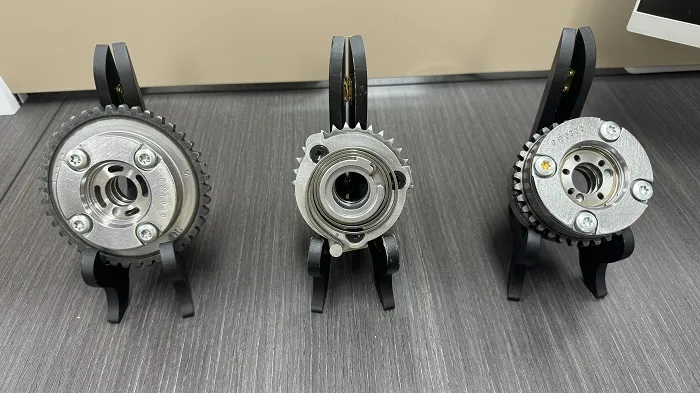
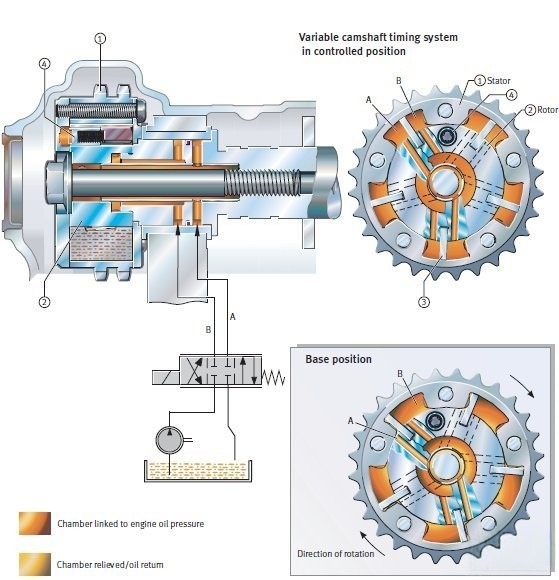
A camshaft phaser is part of the variable valve timing system. It changes the angular relationship between the camshaft and crankshaft, allowing the engine control unit to advance or retard valve timing under different operating conditions.
This function can support better low-speed torque, more stable idling, efficient combustion, and improved emissions control. However, the phaser must respond consistently to oil pressure and control signals.
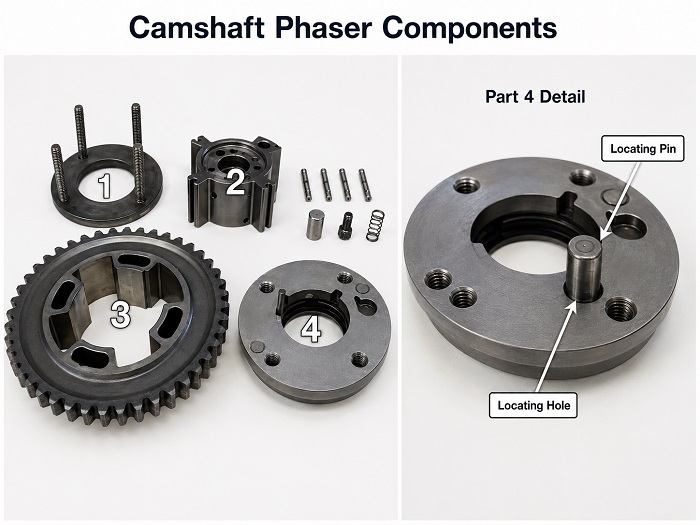
Several internal areas require careful manufacturing control:
Rotor and housing dimensions
Internal oil-channel location
Locking-pin engagement
Return-spring operation
Sealing surfaces
Camshaft mounting position
Timing reference points
Intake or exhaust application
If an internal oil passage is restricted, incorrectly positioned, or contaminated, the phaser may respond slowly or operate inconsistently. If the locking pin does not engage correctly, the engine may produce abnormal noise during startup. Incorrect dimensions may also cause installation problems or affect the timing system.
For this reason, buyers should evaluate the supplier's application-matching and inspection process rather than relying only on a product photo.
Aftermarket camshaft phaser development usually begins with accurate application identification. The supplier must first determine which vehicle, engine, production year, and installation position the replacement component is intended to fit.
Important reference information includes:
OE part number
Engine code
Vehicle make and model
Production year
Intake or exhaust position
Physical sample or technical drawing
Mounting and connection dimensions
Related timing-system configuration
An OE number is an important starting point, but it should not always be used alone. Some OE numbers may have superseded references, market-specific variations, or different applications depending on the engine version.
When evaluating a camshaft phaser china factory, buyers should ask whether the supplier can cross-reference the OE number with the engine code and installation position. This additional verification can reduce ordering errors and prevent visually similar but incompatible parts from entering the supply chain.
If a technical drawing is unavailable, a manufacturer may use a physical sample for dimensional analysis and product development. In this situation, the sample should be clearly identified and inspected before production begins.
The exact manufacturing process varies according to the camshaft phaser design, material, engine application, and production equipment. However, a typical production process may include the following stages.
The supplier confirms the OE reference, engine code, mounting position, and major dimensions. Where a physical sample is used, the internal and external structures may be analyzed to identify the oil passages, rotor design, locking components, and connection points.
The housing, rotor, locking pin, spring, fasteners, seals, and other internal components must be prepared according to the intended design. Material selection should account for mechanical load, oil exposure, operating temperature, wear, and repeated timing adjustments.
The housing and rotor require controlled machining to create the intended mounting surfaces, internal cavities, oil channels, and rotational interfaces.
Machining quality matters because excessive clearance may contribute to internal leakage or unstable movement, while insufficient clearance may restrict rotation. Exact requirements depend on the specific phaser design and application.
Oil pressure controls the movement of many camshaft phasers. Internal oil passages must therefore be correctly positioned and free from burrs, chips, or other contamination.
Cleaning is an important stage because residual machining debris may interfere with oil flow, locking-pin movement, or internal rotation.
The rotor, housing, spring, locking mechanism, seals, and related components are assembled in the correct sequence.
During assembly, the manufacturer should confirm:
Correct component orientation
Smooth rotor movement
Proper locking-pin engagement
Correct spring installation
Secure fastening
No visible contamination or damage
Finished components should be checked before packaging. The inspection process may include dimensional measurement, rotation testing, locking-mechanism testing, leakage inspection, and visual checks.
Only tests actually performed by the supplier should be described as part of its standard quality-control process. Buyers should request clarification when a test requirement is critical to their market.
A complete quality evaluation should include both application verification and product inspection. The following table shows common checks buyers can discuss with a prospective supplier.
Test or Inspection | What It Evaluates | Why It Matters |
OE-number verification | Cross-reference between the offered part and target application | Reduces incorrect product selection |
Dimensional inspection | Mounting dimensions, bore, thread, width, height, and connection points | Supports correct installation |
Oil-passage inspection | Alignment and cleanliness of internal oil channels | Supports proper hydraulic operation |
Rotation inspection | Mechanical movement through the intended operating range | Identifies restricted or abnormal movement |
Locking-pin inspection | Engagement and release of the locking mechanism | Helps prevent abnormal startup movement |
Leakage inspection | Internal or external oil leakage | Supports stable hydraulic response |
Spring and return check | Operation of the return mechanism | Helps maintain predictable positioning |
Visual inspection | Burrs, cracks, surface damage, contamination, and assembly defects | Reduces avoidable product defects |
Batch identification | Product number, production batch, and packaging record | Supports quality investigation and after-sales service |
Not every camshaft phaser uses the same internal structure or control method. Buyers should therefore avoid asking only whether a product has "passed testing." A better approach is to ask which tests were performed, what application was verified, and whether records can be linked to the production batch.
The supplier evaluation process should begin before the first bulk purchase. A low unit price provides limited value if the product has unclear applications, inconsistent labeling, or no traceable production information.
Buyers should ask the following questions:
The supplier should be able to identify the OE number, engine code, vehicle model, production range, and intake or exhaust position.
For example, a BMW camshaft phaser should be matched according to the relevant BMW engine family and OE reference. Descriptions such as “for BMW 2.0L” may not provide enough information because different engine generations can use different phasers.
Some engines use different phasers on the intake and exhaust camshafts. These parts may appear similar but have different internal structures, timing ranges, or mounting features.
The quotation and packaging should clearly identify the installation position.
Sample evaluation gives buyers an opportunity to confirm:
Physical dimensions
OE-number cross-reference
Packaging and labeling
Installation position
Functional performance
Compatibility with the intended application
A sample does not replace complete production quality control, but it helps reduce risk before a large order.
Batch identification allows a supplier and buyer to investigate quality concerns more efficiently. Packaging should clearly display the product reference and relevant application information.
Aftermarket distributors may require customized labels, boxes, barcodes, or application charts. These requirements should be confirmed before production because packaging errors can create warehouse and customer-service problems even when the component itself is correct.
A single vehicle model may use several engine versions across different years and markets. Buyers should confirm the engine code and OE number instead of ordering only by model name.
The intake and exhaust phasers may not be interchangeable. The installation position should be confirmed on the quotation, product label, and packaging.
External similarity does not confirm internal compatibility. Oil passages, locking positions, mounting dimensions, and control behavior may differ.
A camshaft timing fault does not always mean that the phaser itself has failed. Possible causes may include:
Low or contaminated engine oil
Incorrect oil viscosity
Restricted oil passages
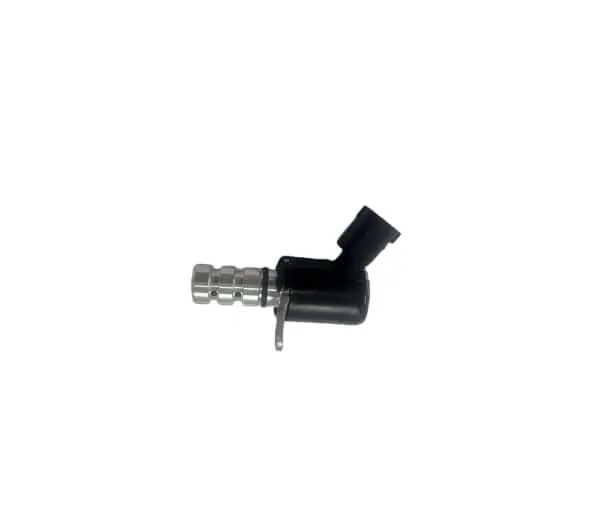
Faulty VVT solenoid
Timing-chain wear
Camshaft or crankshaft position sensor faults
Wiring or control problems
Replacing the phaser without checking the complete system may not correct the original problem.
A low price may be offset by incorrect applications, repeated warranty claims, installation labor, returns, and damage to the buyer’s reputation.
An independent aftermarket component should not be described as a genuine vehicle-brand part unless it is supplied through the authorized original-equipment channel.
A product may instead be described as:
Aftermarket replacement
Cross-referenced to an OE number
Developed for OE-comparable fit and function
Designed for selected vehicle applications
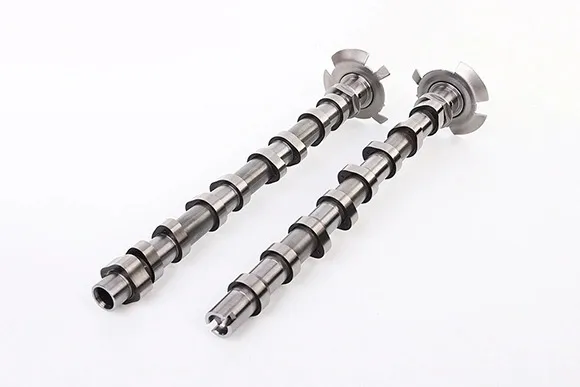
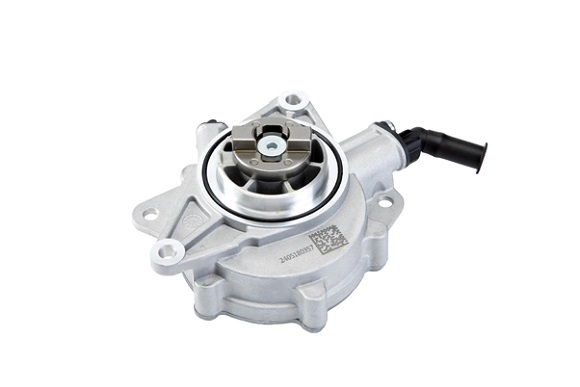
Huizhan is an independent aftermarket automotive-parts manufacturer producing replacement engine components for selected vehicle applications. Its product range includes camshaft phasers, camshafts, oil pumps, vacuum pumps, glow plugs, and related engine parts.
Huizhan supports OE-number matching, sample-based product development, application checking, dimensional inspection, OEM/ODM production, and private-label packaging for aftermarket distributors and importers.
For buyers sourcing a Benz camshaft phaser, Huizhan recommends providing the OE reference, Mercedes-Benz engine code, intake or exhaust position, vehicle production year, required quantity, and destination market.
To improve quotation accuracy, buyers can provide:
OE part number
Engine code
Vehicle model and year
Intake or exhaust position
Required quantity
Target market
Packaging requirements
Photos or measurements of the original sample
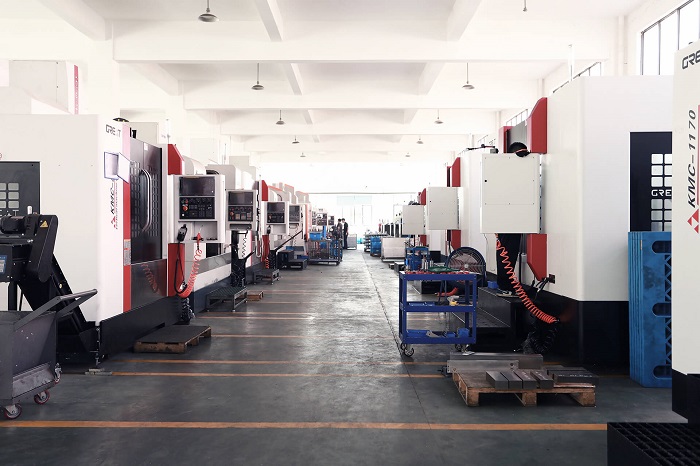
A typical manufacturing process includes application analysis, material preparation, precision machining, oil-passage processing, component cleaning, assembly, dimensional inspection, and functional testing. The exact process depends on the product design and engine application.
Relevant checks may include dimensional inspection, oil-passage inspection, rotation testing, locking-pin testing, leakage inspection, return-mechanism inspection, visual inspection, and batch identification. Buyers should confirm which tests the supplier actually performs.
Not necessarily. Intake and exhaust phasers may have different internal designs, timing ranges, oil passages, or mounting features. Always confirm the OE number and installation position.
An OE number is an important reference, but the engine code, vehicle production year, intake or exhaust position, and superseded part numbers may also need to be checked.
Buyers should provide the OE number, engine code, vehicle model, production year, installation position, required quantity, destination market, and packaging requirements. A physical sample or clear product photos may help when the OE reference is unavailable.
Yes. Sample evaluation can help confirm dimensions, application, labeling, packaging, and functional suitability before bulk production. The sample should be checked against the same specification intended for the final order.
Camshaft phaser quality depends on more than material or appearance. Accurate application matching, controlled machining, clean internal oil passages, correct assembly, functional inspection, and batch traceability all influence whether the component can operate properly in the intended engine.
Bulk buyers should confirm the OE reference, engine code, intake or exhaust position, dimensions, and available testing before approving an order. They should also evaluate the complete VVT system when diagnosing a timing-related problem instead of assuming that the camshaft phaser is always the cause.
Huizhan supports aftermarket distributors with OE-number matching, sample confirmation, replacement camshaft phaser production, and private-label packaging. Send the OE reference, engine code, required quantity, and destination market to confirm the appropriate aftermarket replacement for your purchasing project.

 English