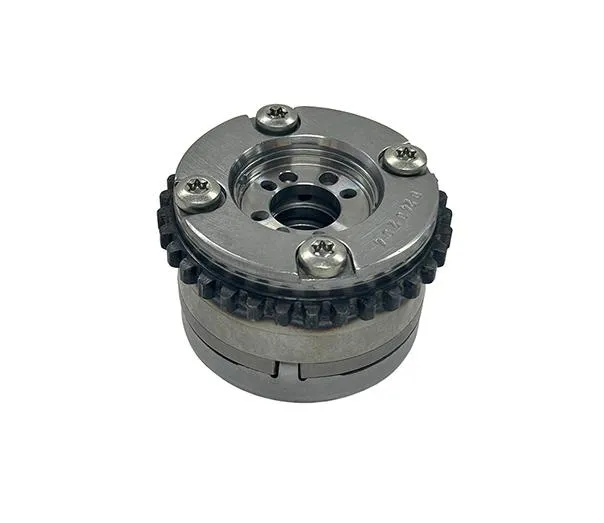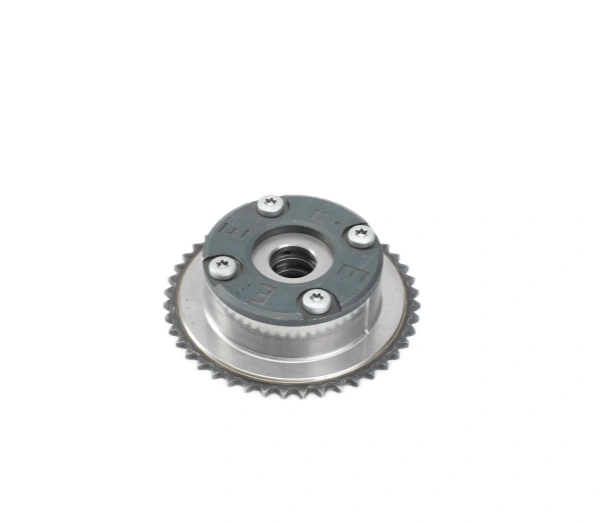
A Benz camshaft phaser, also called a Mercedes-Benz camshaft adjuster, VVT camshaft adjuster gear or variable valve timing unit, is a timing-control component used to adjust the camshaft angle while the engine is running.
By changing the timing of intake and exhaust valve opening, the camshaft phaser helps the engine balance power output, fuel efficiency, combustion stability and emissions performance under different operating conditions.
In aftermarket replacement, accurate matching is essential. Similar-looking camshaft phasers may differ in OE number, engine family, intake/exhaust side, left/right position, gear structure and oil passage design.
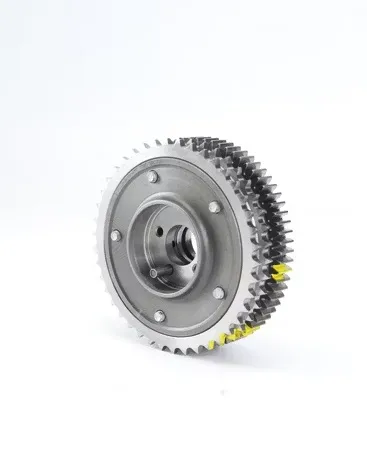
The inspection and replacement of camshaft phaser of Mercedes-Benz vehicle mainly includes the following steps:
Fault diagnosis: First, connect the vehicle with the diagnostic equipment, select the corresponding engine electronic control system, and analyze the fault. By testing the action of the left and right intake camshaft, you can determine whether the phaser is faulty. If the action test is unsuccessful, you need to check the phaser itself, solenoid valve, valve phase, line or plug, and control unit.
Check camshaft position: Use the diagnostic equipment to test the engine control unit, find the fault code, read the actual position of each camshaft and compare with the standard value. If the position is abnormal, you may need to remove the camshaft for inspection.
Replace camshaft phaser: If the camshaft phaser is detected to be faulty, it needs to be replaced. When replacing, it is necessary to check the timing, remove the valve chamber cover, and replace the camshaft assembly with the timing. Use professional tools to prevent improper timing and ensure proper installation.
Installing a new camshaft phaser: When installing a new camshaft phaser, use a professional fixing tool to ensure that the timing is aligned. Pay attention to the position of the camshaft signal plate during installation and ensure that it is aligned with the edge of the cylinder head.
A worn or faulty camshaft phaser may affect valve timing accuracy. Some symptoms may also be related to timing chains, VVT solenoids, camshaft position sensors, oil pressure or wiring, so professional diagnosis is recommended before replacement.
| symptom | Possible Meaning |
| Cold-start rattling noise | The internal locking mechanism or timing gear may be worn |
| Check engine light | Timing-related fault codes may be stored in the engine control system |
| Rough idle | Valve timing may not adjust correctly at low engine speed |
| Poor acceleration | Intake or exhaust timing response may be delayed or unstable |
| Increased fuel consumption | Incorrect valve timing may reduce combustion efficiency |
| Engine vibration or unstable running | Camshaft adjustment may be inaccurate or inconsistent |
| Timing fault codes such as P0015, P0016 or P0340 | Camshaft position, phaser, solenoid, sensor or timing chain issues may need inspection |
For repair parts buyers, these symptoms can help identify market demand, but final replacement should still be confirmed by OE number and vehicle diagnosis.
Huizhan applies strict quality management for Benz camshaft phasers and Mercedes-Benz VVT camshaft adjuster gears, covering raw material selection, production control, product inspection and application validation. As an independent aftermarket engine parts supplier, we focus on OE-number-matched replacement quality, stable fitment and reliable timing-control performance.
For newly developed products, Huizhan conducts vehicle-level testing to check compatibility with the engine control system, sensors and timing-control requirements. We also carry out long-term engine reliability testing for up to 300,000 kilometers to verify product stability during its life cycle.


 English