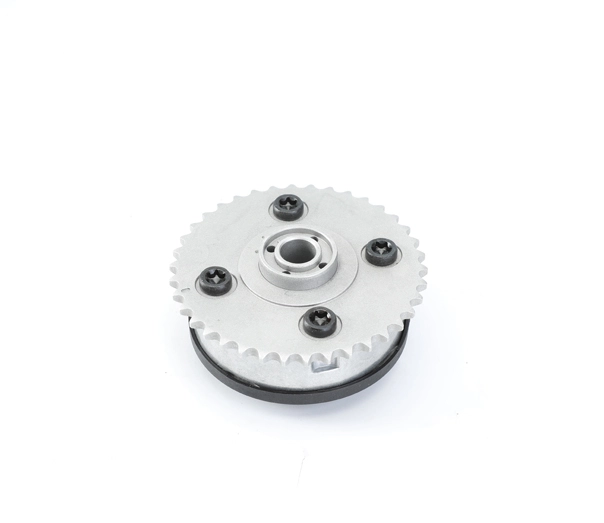
Use the cross-reference table below to confirm the correct BMW camshaft phaser for each engine application. All Huizhan units are dimensionally verified against OEM specifications.
| Position | OEM Part Number | Engine | Typical Applications | Chassis Codes | Notes |
| Intake Side | 11367583207, 11317545959, 11367522288 | N51 / N52 / N54 / N55 / S55 | BMW 1 Series, 2 Series, 3 Series, 4 Series, 5 Series, 6 Series, 7 Series, X1, X3, X4, X5, X6 and Z4. | E81, E87, F20, F21, E88, E82, F23, F22, F87, E90, F30, F80, E93, E92, F34, E91, F31, F33, F83, F32, F82, F36, E60, F10, F07, E61, F11, E63, E64, F12, F13, F06, E65, E66, E67, F01, F02, F03, F04, E84, E83, F25, F26, E70, F15, F85, E71, E72, F16, F86, E86, E85, E89. | Primary Intake VANOS Phaser |
| Exhaust Side | 11367583208, 11367522290 | N51 / N52 / N54 / N55 | Primary Exhaust VANOS Phaser |
Key Notes:
These camshaft phasers are direct OE replacements for BMW N52, N54, and N55 engines.
Suitable for both single and double VANOS systems.
Always verify compatibility using your VIN or engine code before purchase.
Choosing the correct VANOS type is essential when selecting a BMW camshaft phaser. Single VANOS engines use one camshaft phaser, typically on the intake camshaft, while Double VANOS engines use separate intake and exhaust phasers for more precise valve timing control.
| Feature | Single VANOS | Double VANOS |
| Typical Engines | M50TU, early M52, selected S50/S52 variants | M52TU, M54, N20, N52, N54, N55, B46, B48, B58, S55, S58 |
| Camshafts Controlled | Intake camshaft only | Intake and exhaust camshafts |
| Phaser Quantity | Usually 1 unit per engine | Usually 2 units per engine |
| Product Selection | Select by engine code and OE number | Check intake/exhaust position before ordering |
| Common Application | Earlier BMW 6-cylinder petrol engines | Later BMW petrol engines with wider model coverage |
Please confirm the engine code, OE number and intake/exhaust position before ordering, as VANOS design may vary by model year and engine variant.
Accurate diagnosis of a BMW camshaft phaser issue should include fault code reading, oil system inspection, VANOS solenoid checks and live camshaft position monitoring. Before replacing the phaser, always confirm that the fault is not caused by low oil pressure, contaminated oil, a blocked VANOS solenoid, timing chain wear or a camshaft position sensor fault.
Step 1 — Read and Interpret Fault Codes
Use ISTA or a BMW-compatible diagnostic tool to read all stored and pending fault codes. Camshaft timing-related codes such as P0010–P0015 may point to a VANOS control issue, especially when combined with rough idle, poor acceleration or misfire codes. However, these codes do not automatically confirm a failed camshaft phaser.
Step 2 — Check Oil Condition and VANOS Solenoid
Low oil level, poor oil quality or restricted oil flow can cause slow VANOS response. Inspect the engine oil condition and check the VANOS solenoid before replacing the phaser. A blocked solenoid filter or sludge build-up can create symptoms similar to a worn or sticking camshaft phaser.
Step 3 — Monitor VANOS Actual vs Target Position
With a suitable live-data tool, compare the commanded camshaft position with the actual camshaft position at idle and during light throttle changes. Slow response, unstable tracking or a consistent deviation between target and actual values may indicate a VANOS phaser, solenoid, oil pressure or timing system issue.
Replacement Note
For accurate part selection, confirm the engine code, OE number, intake or exhaust position, and vehicle production year before ordering a BMW camshaft phaser.
Performance Symptoms:
•Rough idle or engine misfire — the VANOS system cannot hold stable phase angles at low RPM, causing uneven combustion.
•Sluggish low-speed torque — retard authority is lost; the engine feels flat below 3,000 RPM.
•Reduced peak power — advance authority loss shrinks the effective power band at high RPM.
•Increased fuel consumption — sub-optimal valve timing degrades combustion efficiency across all load points.
•Rattling noise on cold start — oil pressure takes longer to build in a worn phaser, causing momentary chain slack and audible rattle for 1–3 seconds after startup.
Fault Code Indicators
A failing BMW camshaft phaser typically triggers one or more of the following diagnostic trouble codes (DTCs). BMW-specific codes appear alongside the generic SAE equivalents:
•P0010 / 2A82 — Intake Camshaft Position Actuator Circuit (Bank 1)
•P0011 / 2A87 — Intake Camshaft Position Timing Over-Advanced (Bank 1)
•P0012 — Intake Camshaft Position Timing Over-Retarded (Bank 1)
•P0013 / 2A88 — Exhaust Camshaft Position Actuator Circuit (Bank 1)
•P0014 / 2A8A — Exhaust Camshaft Position Timing Over-Advanced (Bank 1)
Before condemning the camshaft phaser, verify engine oil pressure and inspect the OCV solenoid for sludge blockage — both are common root causes on high-mileage N54 and N55 engines. Extended oil change intervals (beyond BMW's 15,000 km or 12-month recommendation) and use of non-LL-01 oil grade are the leading causes of premature phaser wear.
BMW camshaft phaser preventive maintenance mainly includes the following aspects:
Regular inspection and replacement of engine oil: Keep the engine oil clean, regularly replace the high quality engine oil, to avoid impurities damage to the camshaft and its components. High quality engine oil helps to extend the life of the camshaft.
Check and adjust valve timing: to ensure that the valve timing is accurate and avoid problems caused by inaccurate valve timing. If needed, adjust valve timing to ensure valve opens and closes at the correct time.
Checking camshaft sensors: camshaft sensors are used to detect the camshaft position and relay the signal to the engine control Module (ECM). If the sensor fails, it may need to be replaced.
Check oil pressure: Low oil pressure may result in reduced camshaft chain tension, resulting in a delay in timing. Check the oil pressure and fix any problems.
Check ignition timing: Inaccurate ignition timing may result in delayed camshaft timing. Use a timing light or timer to check and adjust the ignition timing.
Follow manufacturer's recommendations: Maintain and inspect according to the engine manufacturer's recommendations to ensure that the camshaft is always in good working order. This may include regularly changing camshaft seals, checking camshaft fasteners, etc.


 English