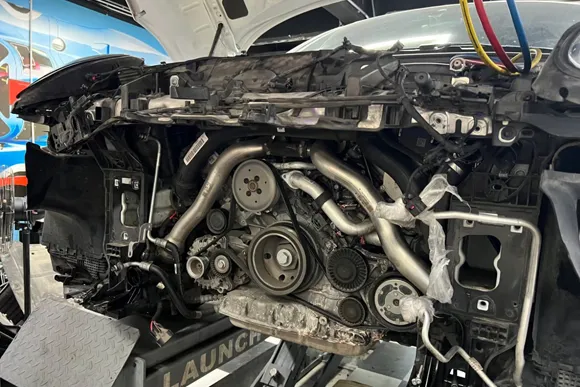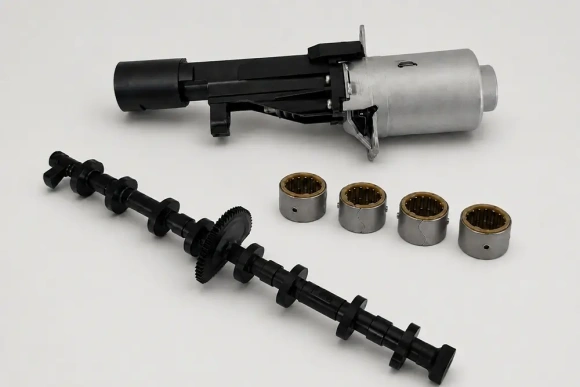
Engine overheating is one of those problems that gives you a warning before it turns catastrophic — but only if you know what to look for. Most drivers glance at the temperature gauge once in a while, but by the time the needle is deep in the red, the damage from engine overheating may already be underway. A warped cylinder head, a blown head gasket, or seized pistons can turn a $200 repair into a $3,000 nightmare in a matter of minutes.
The frustrating part is that engine overheating almost never happens without a reason you could have caught earlier. A slow engine coolant leak, a water pump that's been struggling for months, a radiator cap that stopped holding pressure — these are the kinds of quiet failures that build unnoticed until one hot summer afternoon, steam starts rising from your hood at a red light. By that point, the car engine overheating repair bill is already climbing.
This guide covers the seven most common engine overheating causes in real-world driving, explains the engine overheating symptoms you should never dismiss, walks through what car engine overheating repair actually involves, and answers the questions mechanics hear most often. Whether you're a first-time car owner or someone who just wants to understand what's happening under the hood, this is the information that will save you money — and possibly your engine.
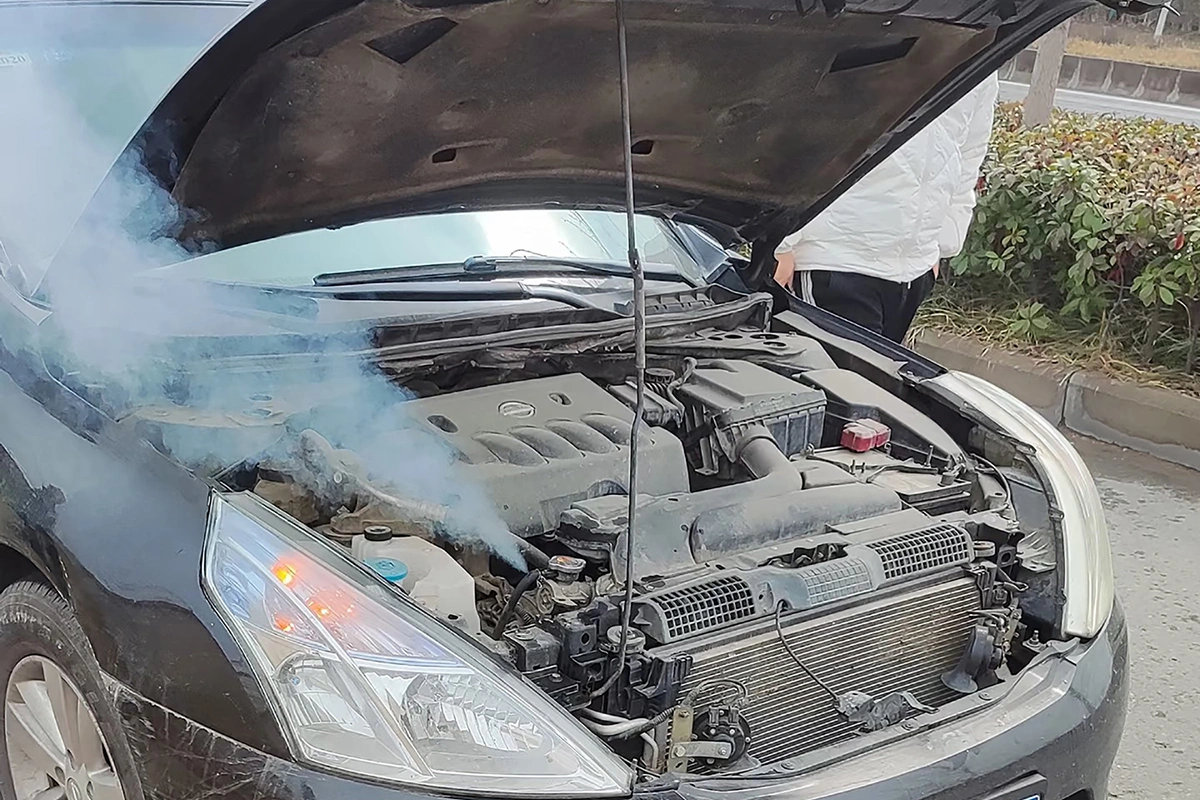
⚠ If your temperature gauge is in the red right now: Pull over safely, turn off the engine, and do not open the radiator cap. Wait at least 30 minutes before checking coolant levels. Opening a pressurized cooling system while hot can cause severe burns.
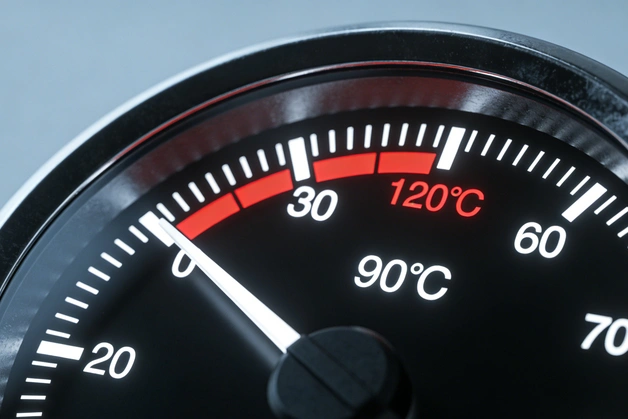
Before diving into causes, it's worth understanding what engine overheating actually looks like from the driver's seat. The engine overheating symptoms don't always start with steam or a screaming dashboard light. In many cases, the signs show up slowly and get dismissed as "the car just doing that thing." Here's what to watch for, ranked from subtle to serious:
| Symptom | What It Means | Urgency |
| Temperature gauge creeping higher than normal | Cooling system struggling under load — often a low coolant level or weak thermostat | Monitor closely |
| Sweet smell from under the hood | Coolant burning off — almost always signals an engine coolant leak nearby | Check soon |
| Heater blowing cold air suddenly | Air pocket in cooling system or critically low coolant level | Check soon |
| Visible puddle under the car (green, pink, or orange) | Coolant leaking from a hose, gasket, or radiator — your car is overheating and leaking coolant | Repair immediately |
| Steam or smoke rising from the hood | Coolant has already reached boiling point — engine damage possible | Stop driving now |
| Knocking or ticking sounds at operating temperature | Thermal expansion causing abnormal metal contact — potential pre-seizure warning | Stop driving now |
| Loss of power or rough idle | Engine management system reducing output to protect from heat damage | Stop driving now |
The single most important thing to understand about engine overheating symptoms is that they escalate quickly. What starts as a slightly high temperature gauge reading on a Wednesday can become a blown head gasket by Friday if the underlying problem isn't addressed. If you notice two or more of these signs together — say, a sweet smell combined with a heater that suddenly blows cold — treat it as urgent rather than waiting to see if it "goes away on its own."
The cold heater trick:
If your temperature gauge starts climbing and you can't pull over immediately, turn on the heater full blast. This sounds counterintuitive, but the heater core acts as a secondary radiator, pulling heat away from the engine coolant. It won't fix the problem, but it can buy you enough time to reach a safe stopping point.
The cooling system in a modern car is more sophisticated than most people realize — a carefully balanced circuit of coolant, pressure, airflow, and mechanical components working in sync. Engine overheating happens when any one of those components fails, and the cause isn't always the obvious one. Here are the seven engine overheating causes mechanics see most often, and what each one actually means for your car.
Low coolant is the most common starting point for engine overheating — and the easiest to overlook. Coolant absorbs heat from the engine block and carries it to the radiator, but the system can't keep up when levels drop. Engines don't need to run dry to fail; even 20–30% below the recommended level can push temperatures into dangerous territory on a hot day or in stop-and-go traffic.
The harder question is why the level keeps dropping. An engine coolant leak can come from many places — cracked hoses, a deteriorating radiator, a failing water pump seal, or a compromised head gasket. External leaks show up as puddles under the car with a distinctive sweet smell; internal leaks, typically from a failing head gasket, burn off inside the engine and leave no visible trace. Either way, if your car is overheating and leaking coolant at the same time, the leak is the root cause — and it won't resolve itself.
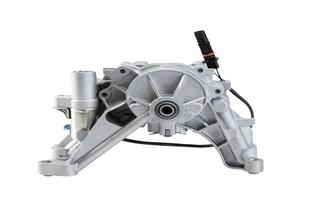
Can a bad water pump cause overheating? Without question — and it's the failure mode most likely to be missed on a first pass. The car electric water pump is the heart of the entire cooling system. Its sole job is to keep coolant moving: from the engine block where heat is generated, through the cylinder head, out to the radiator to be cooled, and back again in a continuous pressurized loop. Everything else in the cooling system — the radiator, the thermostat, the coolant itself — only works if the water pump is circulating fluid at the right volume and pressure. The moment that circulation slows or stops, temperatures rise fast.
What makes water pump failure so easy to misdiagnose is that it doesn't always announce itself with a dramatic failure. The pump can fail gradually — and in some cases, with the coolant level appearing perfectly normal, no puddle under the car, and no obvious warning signs until the temperature gauge spikes. Understanding the specific ways a water pump fails is the key to catching the problem before it damages your engine.
The thermostat controls when coolant flows from the engine to the radiator. When it becomes stuck closed, coolant cannot reach the radiator to release heat, and engine overheating can occur within minutes.
A stuck thermostat often causes the temperature gauge to climb quickly after the engine starts. Unlike other cooling system failures, coolant levels may remain normal because the problem is not fluid loss but restricted circulation.
Because thermostats are inexpensive components, replacing them periodically is often recommended to prevent unexpected overheating problems.
The radiator removes heat from the coolant before it returns to the engine. For this process to work, coolant must flow freely through the radiator channels while air passes through the cooling fins.
Over time, rust, debris, or degraded coolant can clog the internal passages of the radiator, reducing its ability to dissipate heat. External blockages such as dirt, insects, or road debris can also restrict airflow and reduce cooling efficiency.
When radiator performance declines, overheating may only appear under heavy loads such as hot weather, long drives, or towing. If you notice the car runs fine in winter but overheats in summer or during trailer towing, a restricted radiator is high on the list of suspects.
When a vehicle is moving at highway speed, natural airflow helps cool the radiator. However, during slow traffic or idling, the engine depends on the cooling fan to move air through the radiator.
If the fan stops working, the radiator receives little airflow and engine overheating can occur in city driving conditions. Drivers often notice that the car overheats in traffic but returns to normal temperature on the highway.
A blown head gasket is both a cause and a result of engine overheating. The gasket seals the engine block and cylinder head, keeping coolant, oil, and combustion gases separated.
When the gasket fails, combustion gases can enter the cooling system while coolant may leak into the cylinders or oil passages. This disrupts coolant circulation and quickly raises engine temperatures.
Typical warning signs include bubbling coolant, white exhaust smoke, unexplained coolant loss, or milky engine oil. Because head gasket repairs are expensive, preventing overheating earlier in the cooling system is essential.
The biggest mistake drivers make when dealing with an overheating car is replacing the cheapest part first and hoping for the best. Thermostats are $20, so it feels reasonable to swap one out and see if the problem goes away. But if a bad water pump was the actual cause, you've just spent $150 in labor for a part that wasn't the problem, and the engine overheats again on the way home. A proper diagnosis — including a cooling system pressure test, a coolant flow inspection, a visual check of the water pump weep hole, and a combustion gas test if a head gasket is suspected — takes an hour but saves you from a string of pointless parts replacements.
Pressure test the cooling system
A pressure tester screws onto the radiator neck and holds the system at operating pressure. Any external leak will reveal itself within minutes, and a pressure drop without a visible leak points to an internal head gasket failure. This test costs $0 if your shop does it as part of a diagnosis, or about $80 as a standalone service.
Test coolant flow and thermostat function
With the engine warmed up and the radiator cap off (never with a hot engine), a technician can watch whether the coolant starts flowing when the thermostat opens. No visible flow, or flow that starts too late, confirms a thermostat problem or severely restricted circulation.
Inspect the water pump — bearing, weep hole, and impeller
The mechanic will check for shaft wobble, inspect the weep hole for coolant residue, and listen for bearing noise with the engine running. A water pump that shows any of these signs — shaft play, dried coolant around the housing, a whining bearing — should be replaced at this visit. On timing belt-driven engines, this is also the time to replace the pump even if it appears intact, since the timing belt teardown needed to access it is already complete. Impeller condition can only be confirmed by removing and inspecting the pump internally; if flow testing suggests poor circulation with the thermostat confirmed open, impeller failure is the primary suspect.
Flush and refill the cooling system
If the coolant is old, discolored, or contaminated, a full flush removes all the old fluid along with any accumulated scale and corrosion. Fresh coolant mixed with distilled water at the manufacturer-recommended ratio restores the system's ability to protect against both overheating and freezing.
Test for head gasket failure if overheating was severe
A combustion gas test kit (sometimes called a block test) introduces a chemical indicator fluid into the cooling system. If combustion gases are present, the fluid changes color — this confirms that a head gasket failure has allowed combustion gases to enter the coolant circuit. If this test comes back positive, head gasket repair becomes unavoidable.
This depends entirely on how far the temperature gauge has risen. If the needle is slightly above normal but not yet in the red, and you’re less than a mile or two from a shop, it may be acceptable to drive cautiously — with the heater on full and close attention to the gauge. If the needle is in the red zone, steam is visible, or the engine is making abnormal noises, do not drive it. The potential for severe engine damage escalates rapidly once temperatures reach 250°F or above, and a tow bill is dramatically cheaper than an engine rebuild. When in doubt, call for a tow.
Can a bad water pump cause overheating without any visible leak?
Yes — and this is one of the most common diagnostic traps in engine overheating troubleshooting. A water pump can fail completely without leaking a single drop externally, specifically when the impeller inside the pump corrodes, erodes, or slips on its shaft. In this scenario, the pump housing remains sealed, the coolant level stays normal, there's no puddle under the car, and the belt driving the pump still turns — but the impeller isn't generating any meaningful flow. The coolant stagnates inside the engine rather than circulating, and engine overheating occurs exactly as it would from a massive coolant loss — just with none of the usual evidence. This specific failure pattern is the subject of a detailed breakdown in the water pump overheating guide, including a 5-step diagnosis process and the full range of replacement water pumps for each drive type.
How long can I drive with an overheating engine before serious damage occurs?
In most cases, the answer is measured in minutes rather than miles. Once coolant temperatures rise above the point where the pressure cap releases — typically around 250°F — coolant begins boiling and cavitating, which means the water pump can no longer circulate it effectively. At that point, metal components in the cylinder head begin expanding beyond their tolerance limits. Aluminum cylinder heads are particularly vulnerable; they can warp from a single severe overheating event. If you continue driving with the temperature gauge in the red, you risk not just a head gasket but a warped head that requires machining or replacement. The general guidance from most engine builders is: once the gauge enters the red zone, pull over within one to two minutes, not when it's convenient.
Is it safe to add water to a coolant system in an emergency?
In an emergency situation — stranded on the road, engine cooled down, and no coolant available — adding clean water is acceptable as a temporary measure to get you to a shop. However, water alone doesn't have the corrosion inhibitors and antifreeze properties that proper coolant provides. Using water without antifreeze in cold weather is obviously dangerous from a freezing standpoint, but even in warm weather, running on water degrades the internal surfaces of the cooling system faster than correctly mixed coolant. Get the system properly flushed and refilled as soon as possible after using water as an emergency top-up.
Why does my car only overheat in traffic, but not on the highway?
This pattern almost always points to a cooling fan problem. At highway speeds, the natural airflow through the grille is sufficient to cool the radiator without any fan assistance. In slow traffic or at idle, the car depends entirely on its electric or mechanical fan to pull air through the radiator. If the fan isn't working properly — whether due to a bad relay, a seized fan clutch, or a faulty temperature sensor — the radiator gets inadequate airflow and the engine temperature climbs. The fact that the car is fine at speed is actually a helpful diagnostic clue that narrows the problem significantly. A coolant restriction or low coolant level tends to cause overheating regardless of speed; a fan problem is speed-dependent.
Engine overheating is almost always preventable, and it almost always traces back to a component that was giving signals weeks or months before things went wrong. Of the seven causes covered in this guide, water pump failure stands out as the most dangerous precisely because it can be so quiet in the early stages — no puddle, no dramatic noise, just a temperature gauge that climbs a little higher than it used to. By the time it's obviously failing, the engine has often already been exposed to sustained heat stress.
The smart move is to treat your water pump as a service item, not a failure-only replacement. If your car is approaching 60,000–80,000 miles, if the timing belt is due, or if you've noticed any elevated temperature patterns — get the pump inspected before it forces the issue. For the complete deep dive on how water pump failure causes overheating, the 4 failure modes, 5 specific symptoms, and what replacement really costs, the water pump overheating guide covers everything in detail.

 English
.webp "Oil Pump with Valve-LR096231 LR069790")