A glow plug warning light normally appears briefly before starting a diesel engine. When the light flashes during driving, stays on after startup or appears together with reduced engine performance, the issue may involve the glow plug system, control module, wiring, emissions components or engine-management faults.
On many modern diesel vehicles from Volkswagen, Audi, BMW and Mercedes-Benz, the glow plug warning light no longer functions only as a preheating indicator. In some applications, it also acts as a general diesel engine warning light linked to ECU fault detection and emissions-system monitoring.
A flashing glow plug warning light should not automatically be assumed to mean failed glow plugs. Problems involving the glow plug control module, brake light switch, EGR system, injector operation, throttle body or diesel particulate filter may trigger the same warning.
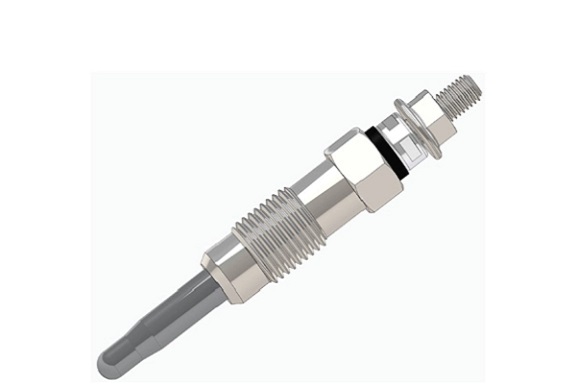
Diesel engines use glow plugs to increase combustion chamber temperature during cold starts. The car glow plug light indicates when the preheating system is active.
Under normal operating conditions:
The glow plug light appears briefly after ignition is switched on
The light turns off before engine cranking
The engine starts normally
If the light remains illuminated, flashes during driving or returns after startup, the ECU may have detected a diesel system fault.
A solid glow plug light and a flashing glow plug light often indicate different types of problems.
| Warning Light Behaviour | Possible Meaning |
| Brief solid light before startup | Normal preheating operation |
| Solid light remains on | Stored fault or glow plug issue |
| Flashing glow plug light | Active diesel-management fault |
| Flashing light with limp mode | ECU protection strategy triggered |
On many common rail diesel engines, a flashing glow plug warning light usually indicates a fault serious enough for the ECU to reduce engine performance or store active diagnostic trouble codes.
Several faults can trigger a flashing glow plug warning light.
| Possible Cause | Typical Symptoms |
| Failed glow plug | Hard cold starts |
| Glow plug control module fault | Flashing warning light |
| Wiring corrosion | Intermittent faults |
| Brake light switch failure | Flashing light on VW/Audi |
| EGR valve fault | Reduced engine performance |
| DPF restriction | Limp mode activation |
| Injector imbalance | Rough idle and smoke |
| Throttle body fault | Poor throttle response |
Some diesel engines use the glow plug warning light as a general warning indicator for multiple systems.
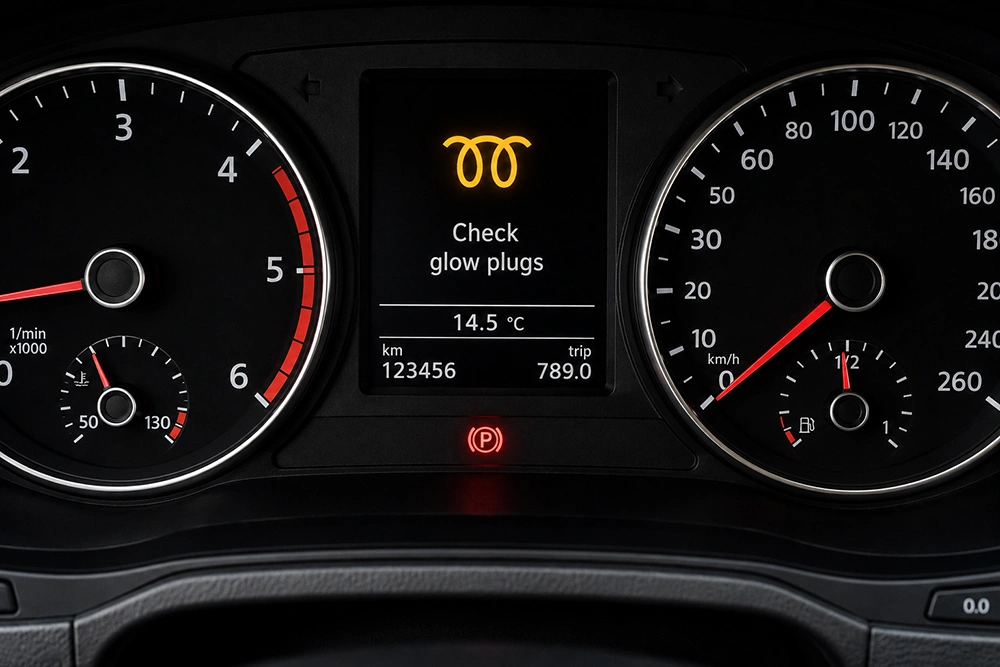
Many Volkswagen and Audi diesel engines use the glow plug indicator as a broader diesel system warning light.
In some cases, the warning may be triggered by:
Brake light switch failure
EGR faults
Throttle body faults
DPF regeneration issues
Turbocharger boost-control problems
This often causes confusion because the engine may still start normally even though the glow plug warning light flashes.
It depends on whether the warning light is solid or flashing and whether the vehicle enters limp mode.
The vehicle may continue operating temporarily if:
The engine starts normally
No limp mode is present
No severe smoke appears
Engine temperature remains stable
However, the fault should still be diagnosed because cold-start performance and emissions may worsen over ti
Driving should be minimised if the vehicle develops:
Reduced engine power
Limp mode
Excessive smoke
Poor throttle response
Severe misfiring
Turbo underboost warnings
Continuing to drive with active diesel-management faults may increase stress on the DPF, turbocharger or emissions system.
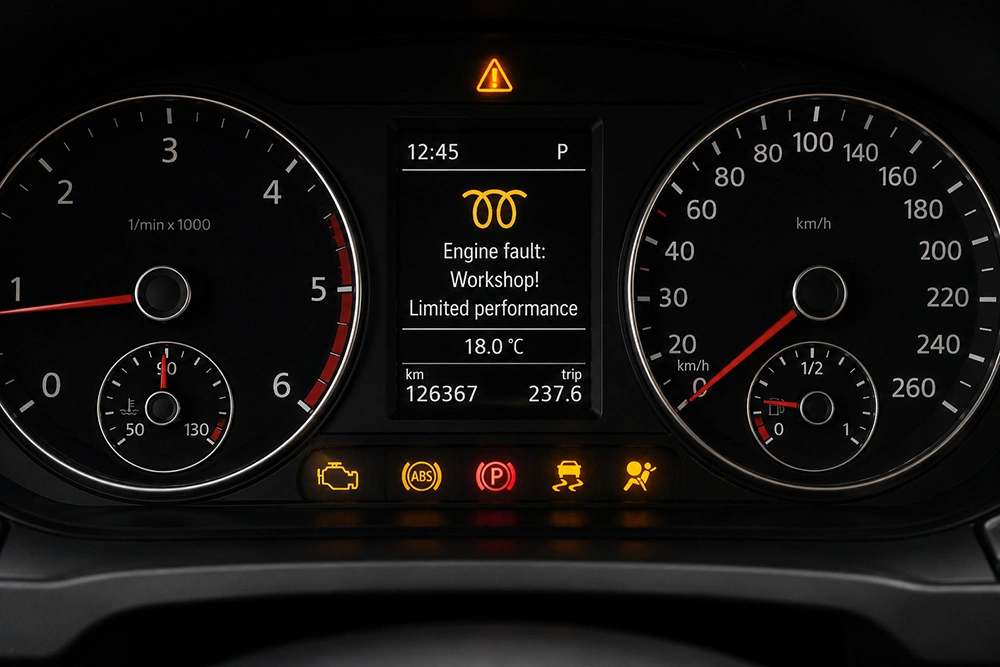
Yes. Many diesel ECUs reduce engine performance when major emissions or electrical faults are detected.
Limited RPM
Reduced turbo boost
Slower acceleration
Increased fuel consumption
Delayed throttle response
This protection strategy is especially common on Euro 5 and Euro 6 diesel engines with strict emissions monitoring systems.
| Fault Code | Description |
| P0670 | Glow plug control module fault |
| P0671–P0678 | Cylinder-specific glow plug circuit faults |
| P0380 | Glow plug heater circuit malfunction |
| P0683 | Glow plug communication fault |
| P2146 | Injector group voltage supply issue |
A flashing glow plug warning light does not always mean the glow plugs themselves are faulty.
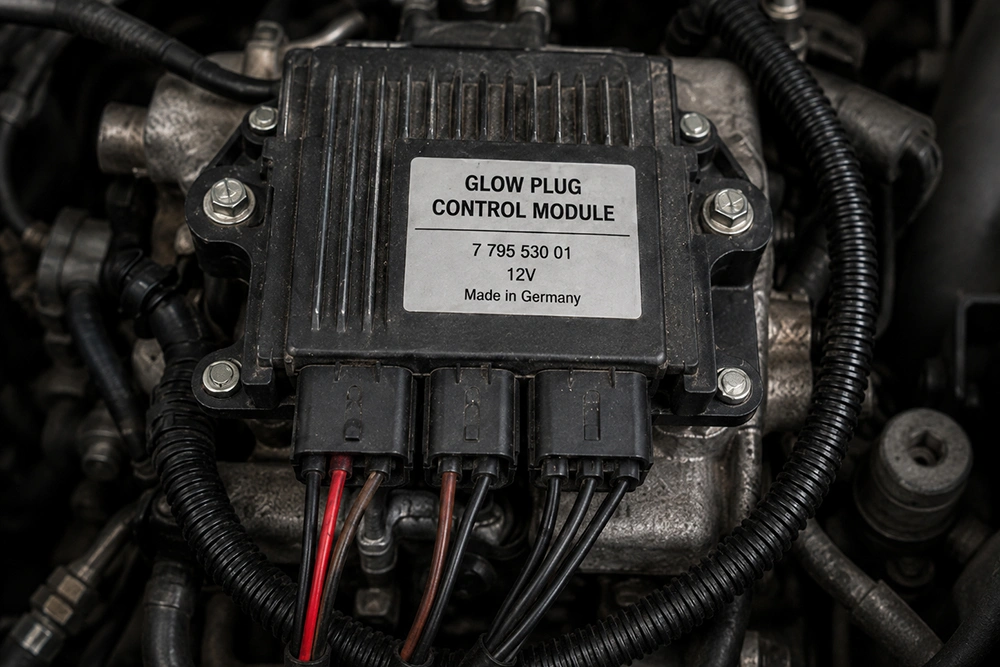
Glow plug control modules regulate heating duration and voltage supply to the glow plugs.
Common module failure symptoms include:
Flashing dashboard warnings
Multiple glow plug fault codes
Repeat faults after replacing glow plugs
Intermittent cold-start problems
Communication errors during diagnostics
Glow plug activation failure
On some BMW diesel engines, problems related to the BMW glow plug system are more commonly caused by control module failures than by the glow plugs themselves.
Older diesel engines commonly used a simple glow plug relay, while newer engines use ECU-controlled modules.
| Component | Function |
| Glow plug relay | Basic current switching |
| Glow plug module | Electronic heating management |
Modern modules can monitor:
Current draw
Heating duration
Individual cylinder operation
Fault feedback to ECU
This allows the ECU to detect heating-system problems more accurately.
Glow plug faults often become more noticeable during winter or low-temperature operation.
Extended cranking
Hard starting
White smoke after startup
Rough idle during warm-up
Increased diesel smell
Cold cylinder temperatures make diesel combustion more difficult during startup. Weak glow plugs may not generate enough heat to stabilise combustion quickly. Low battery voltage during winter conditions can also reduce glow plug efficiency.
This situation is common on many diesel vehicles.
Possible causes include:
Early-stage glow plug wear
Intermittent control module faults
Stored historical DTCs
Brake switch problems
Emissions-system faults
Software-related communication issues
The absence of starting problems does not necessarily mean the fault can be ignored.
Glow plug warning light diagnosis should combine electrical testing, scan-tool analysis and system inspection.
Check for:
Stored DTCs
Glow plug activation data
Cylinder-specific faults
EGR and emissions fault
Module communication errors
Some diesel engines use the same warning light for multiple systems.
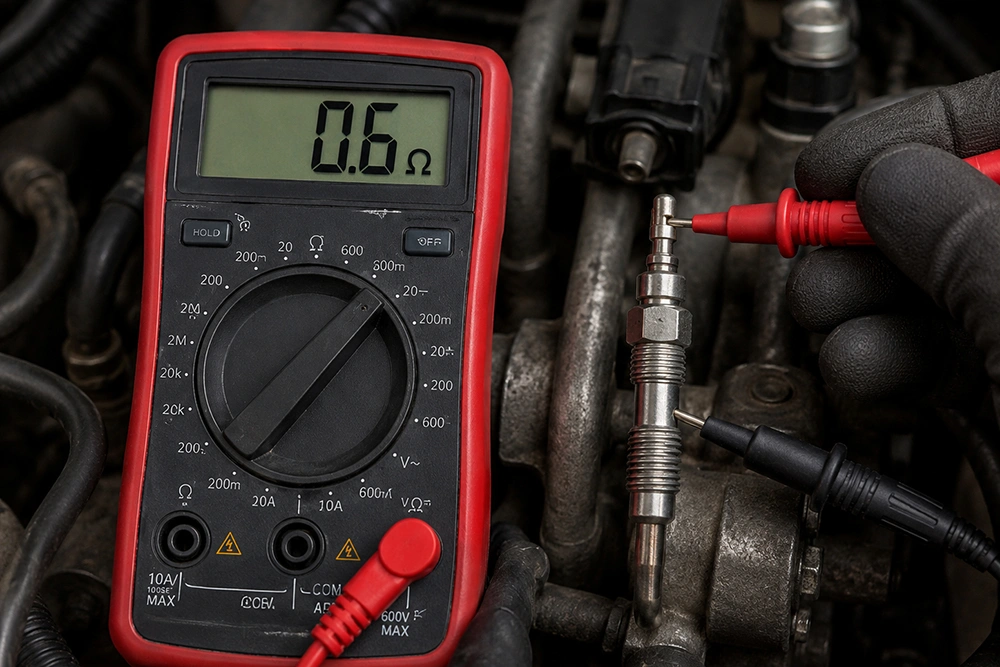
Glow plugs normally operate with very low resistance values.
A cylinder showing a significantly different reading from the others may indicate a failed or weak glow plug.
Resistance testing alone may not identify partially failed glow plugs.
Current draw analysis helps identify:
Weak ceramic glow plugs
Uneven heating behaviour
Slow activation problems
This method is commonly used in professional workshop diagnostics.
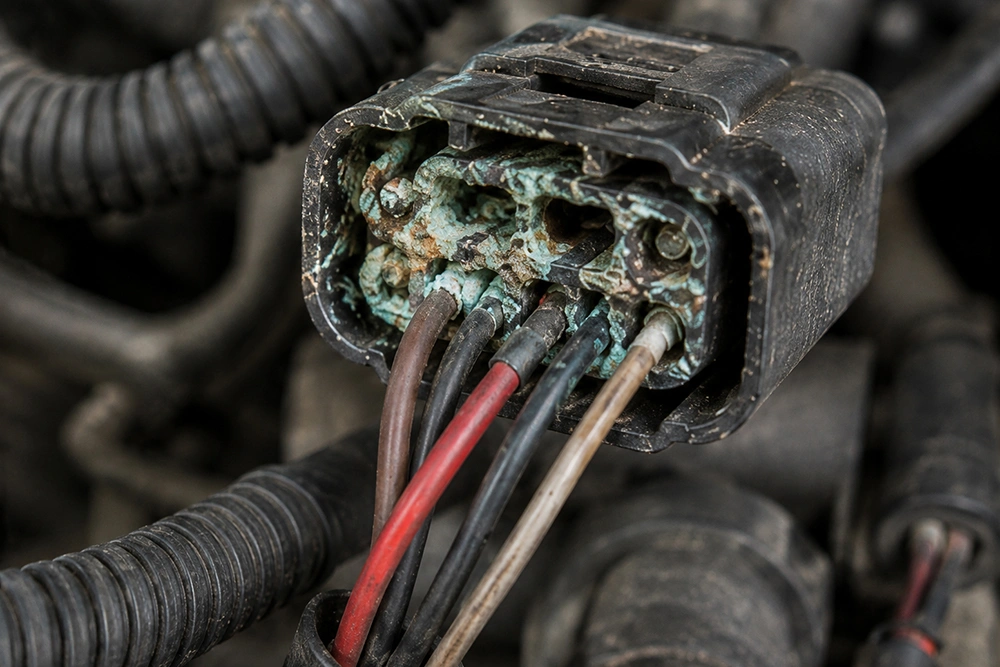
Inspect for:
Corrosion
Loose terminals
Water intrusion
Heat damage
Broken wiring
Electrical faults may trigger intermittent glow plug warnings.
Low system voltage can affect glow plug operation during cold starts.
Battery condition and charging-system performance should also be inspected.
Advanced workshop diagnostics may include:
Oscilloscope analysis
Current ramp testing
ECU communication testing
Live-data monitoring
Injector correction analysis
DPF differential-pressure inspection
Professional diagnostics become increasingly important on modern diesel engines with integrated emissions systems.
Failed glow plugs do not usually cause immediate engine damage, but prolonged operation with unresolved faults may contribute to:
Increased DPF loading
Excessive white smoke
Starter motor wear
Battery stress
Increased emissions
Poor cold-weather reliability
Repeated hard starting can also increase stress on the starting system.
Glow plug system faults commonly appear on:
| Brand | Common Engines |
| BMW | N47, M57 |
| Mercedes-Benz | OM642 |
| Volkswagen | 2.0 TDI |
| Audi | 2.0 TDI |
| Ford | Duratorq diesel |
| PSA | HDi diesel engines |
High mileage, short-distance driving and moisture exposure can accelerate electrical-system wear.
Before ordering replacement glow plugs or modules, confirm:
| Item to Verify | Why It Matters |
| OE reference number | Prevents compatibility problems |
| Voltage specification | Incorrect voltage affects heating performance |
| Connector design | ECU communication differs between systems |
| Engine code | Same model may use different glow plug systems |
| Module compatibility | Incorrect modules may trigger fault codes |
| Wiring condition | Electrical faults can mimic failed glow plugs |
For aftermarket distributors and workshops, stable batch consistency, accurate cross-reference data and corrosion-resistant terminal materials can help reduce warranty claims and repeat diagnostics.
Before replacing glow plug system components, inspect:
Glow plug resistance values
Current draw consistency
Glow plug module communication
Wiring harness condition
Battery voltage during startup
Injector correction values
Stored ECU fault history
Moisture contamination near connectors
Glow plug warning lights may sometimes indicate secondary diesel-management faults rather than failed glow plugs alone.
A flashing glow plug warning light often indicates a stored diesel-management fault, emissions problem or glow plug module issue.
The vehicle may still operate temporarily, but flashing warnings or limp mode symptoms should be diagnosed as soon as possible.
No. The warning may also be caused by EGR faults, brake switch issues, glow plug modules, wiring problems or ECU-related faults.
Yes. Weak battery voltage may affect glow plug operation and trigger warning lights during cold starts.
Common codes include P0670, P0380, P0683 and cylinder-specific P0671–P0678 faults.
Some VW and Audi diesel engines use the glow plug light as a general diesel fault indicator linked to emissions or electrical-system faults.
Yes. A failed module may prevent proper voltage delivery to the glow plugs during cold starts.
Not always. Diagnostics should confirm whether the fault originates from the glow plugs, module or wiring system.

 English