Bad glow plug symptoms often appear during cold starts, especially when a diesel engine cranks normally but struggles to fire in low temperatures. Drivers may notice extended cranking, white exhaust smoke, rough idle, increased diesel smell or a flashing glow plug warning light. In many cases, the symptoms become worse gradually rather than causing an immediate no-start condition.
Glow plugs help heat the combustion chamber during cold starts. When one or more glow plugs stop heating correctly, diesel fuel may not ignite completely until cylinder temperatures rise naturally. Modern common rail diesel engines from BMW, Mercedes-Benz, Volkswagen and Audi are particularly sensitive to glow plug performance because of tighter emissions control and more precise injection timing.
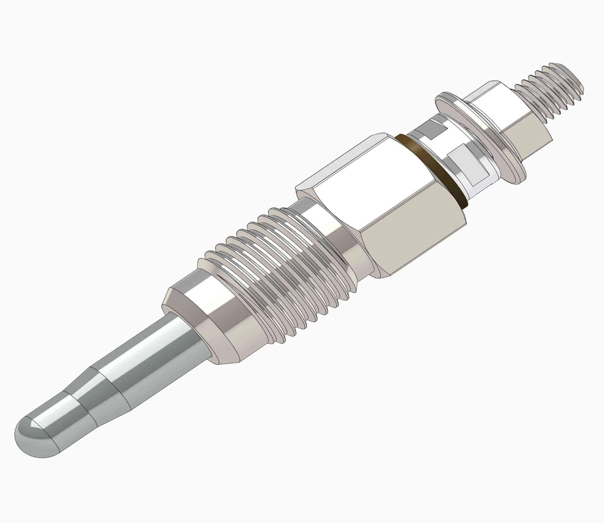
Unlike petrol engines, diesel engines rely on compression heat to ignite the fuel. During cold starts, cylinder temperatures may not be high enough for stable combustion. This is where glow plugs play a critical role. Audi and BMW glow plugs are common examples in modern diesel engines, providing the additional heat required inside the combustion chamber to ensure reliable ignition during startup and the warm-up period.
Modern glow plug systems may continue operating after the engine starts. This post-heating phase helps reduce:
White smoke
Cold-start misfires
Rough idle
Diesel knock
Hydrocarbon emissions
Some newer systems also use pressure-sensor glow plugs to support combustion monitoring and emissions management.
One of the earliest bad glow plug symptoms is difficult cold starting. The engine may crank normally but require several attempts before firing.
This problem becomes more noticeable when:
Ambient temperature drops
One cylinder fails to preheat properly
Glow plug heating time becomes inconsistent
If the engine starts normally when warm but struggles after sitting overnight, the car glow plug system should be inspected.
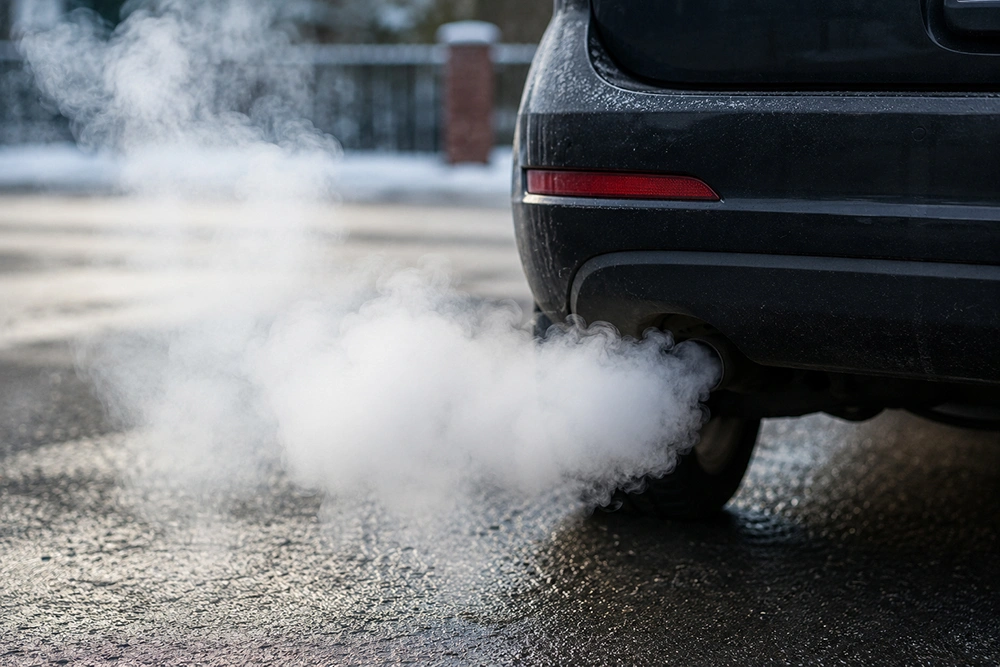
White smoke during startup is often linked to unburnt diesel fuel. When combustion temperature is too low, fuel atomises but does not ignite completely.
Typical signs include:
White or grey smoke immediately after startup
Fuel smell from exhaust
Smoke disappearing once the engine warms
Injector leakage, compression loss or coolant-related faults may produce similar symptoms, so glow plugs should not automatically be assumed to be the only cause.
A diesel engine with weak or failed glow plugs may idle unevenly for the first few minutes after startup.
Drivers may notice:
Engine shaking
RPM fluctuation
Uneven combustion noise
Temporary misfire sensation
The idle condition often improves as cylinder temperature increases.
Many modern diesel engines monitor glow plug performance through the ECU.
Common warning signs include:
| Dashboard Behaviour | Possible Meaning |
| Flashing glow plug light | Electrical or control fault |
| Glow plug light remains on | Heating circuit issue |
| Check engine light with cold-start problems | Glow plug or module fault |
Some vehicles store fault codes before noticeable starting problems appear.
Glow plug fault codes vary by manufacturer, but these are among the most common:
| Fault Code | Description |
| P0670 | Glow plug control module fault |
| P0671–P0678 | Cylinder-specific glow plug circuit fault |
| P0380 | Glow plug or heater circuit malfunction |
| P0683 | Glow plug communication fault |
On some diesel engines, especially BMW and Mercedes applications, glow plug control modules fail more frequently than the plugs themselves.
Yes. Modern common rail diesel engines may become difficult to start even if only one glow plug fails.
The effect depends on:
Outside temperature
Engine compression
Fuel injection condition
ECU calibration
Cylinder balance
Older diesel engines are often more tolerant of individual glow plug failure, while Euro 5 and Euro 6 systems are generally more sensitive.
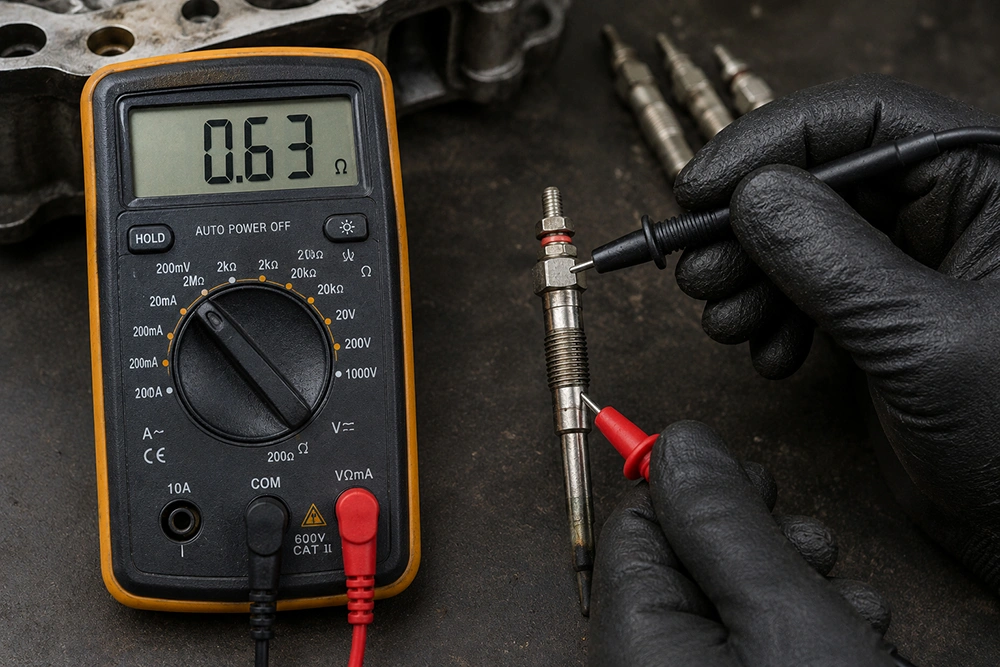
Glow plug diagnosis should combine electrical testing and system inspection rather than relying on fault codes alone.
Check for:
Stored DTCs
Cylinder-specific glow plug faults
Glow plug activation data
Module communication errors"
"Most glow plugs operate with very low resistance values.
An open circuit or a reading significantly different from the other cylinders may indicate a failed plug.
Comparing all cylinders is usually more useful than relying only on absolute resistance figures.
A glow plug may show continuity during resistance testing but still fail under operating load.
Current draw testing is often more reliable for identifying weak ceramic glow plugs.
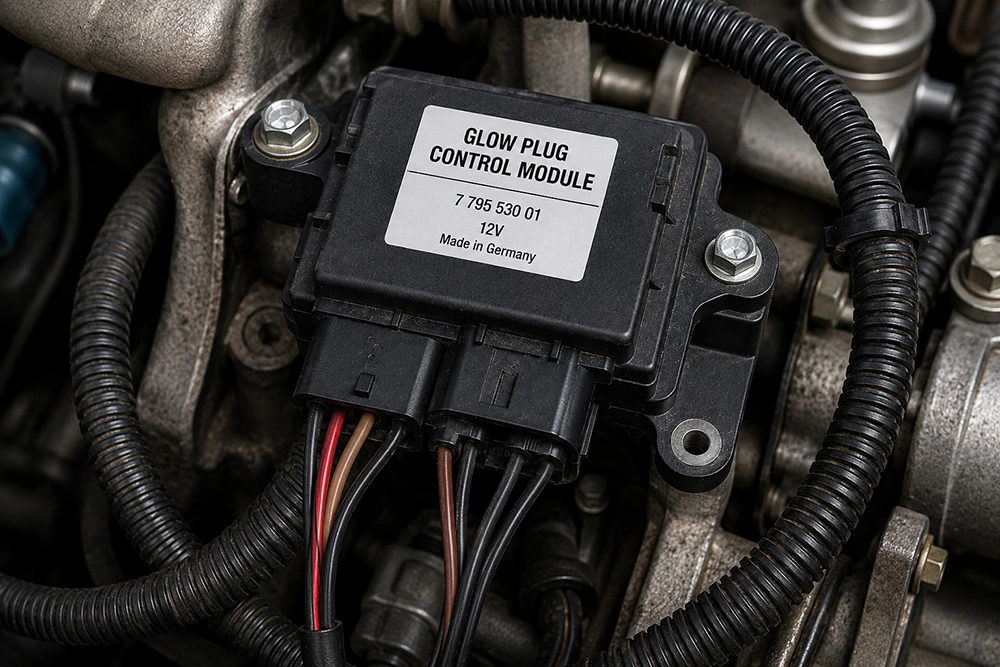
Glow plug modules may fail because of:
Internal transistor damage
Heat exposure
Water ingress
Corrosion inside electrical connectors
Replacing glow plugs without checking the module can result in repeat fault codes.
Some injector faults can produce symptoms similar to glow plug failure.
| Symptom | Glow Plug Problem | Injector Problem |
| Hard cold start | Common | Possible |
| White smoke at startup | Common | Common |
| Rough idle only when cold | Common | Less common |
| Fuel smell | Possible | Common |
| Misfire when warm | Rare | Common |
| Fuel correction imbalance | Rare | Common |
Injector balance testing and fuel correction data can help separate the two faults.
Glow plug faults are common on high-mileage diesel engines, including:
BMW N47 and M57
Mercedes OM642
VW TDI engines
Audi 2.0 TDI
PSA HDi engines
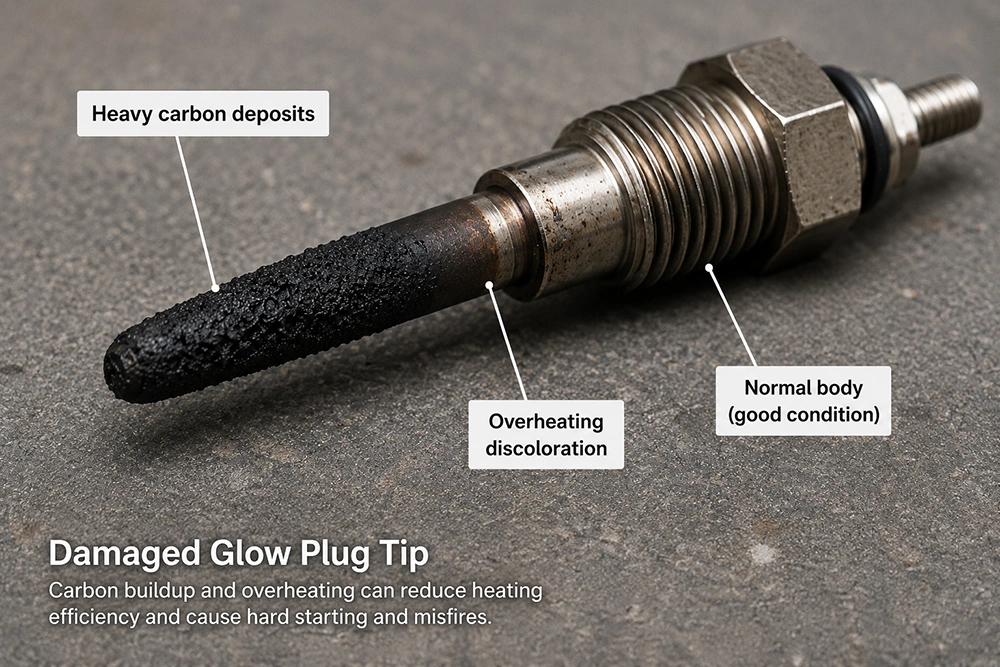
Repeated short-distance driving and long service intervals may increase carbon buildup around the glow plug tip.
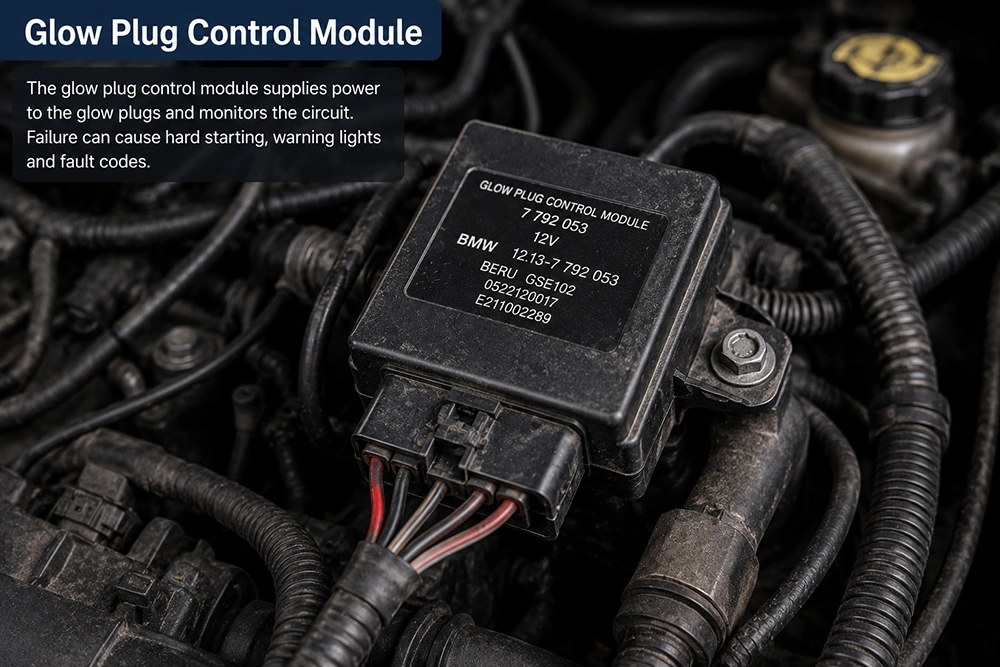
Two main glow plug designs are commonly used in diesel engines.
| Type | Characteristics |
| Metal glow plug | Lower cost and slower heating |
| Ceramic glow plug | Faster heating and higher temperature capability |
Ceramic glow plugs support faster cold starts and lower emissions, but they are generally more sensitive to voltage irregularities and installation damage.
Glow plugs are often replaced when:
Cold-start complaints appear
Fault codes return repeatedly
Resistance values become inconsistent
Mileage becomes significantly high
Multiple cylinders show slow heating behaviour
Many workshops replace all glow plugs together to reduce future labour costs and maintain balanced cylinder heating.
However, seized glow plugs should be removed carefully to avoid cylinder head damage.
Before sourcing replacement glow plugs, confirm the following:
| Item to Verify | Why It Matters |
| OE reference number | Prevents fitment mismatch |
| Voltage rating | Incorrect voltage affects heating performance |
| Thread size and reach | Incorrect dimensions may damage the cylinder head |
| Connector type | ECU compatibility varies |
| Ceramic or metal design | Must match engine specification |
| Engine code | The same vehicle may use multiple plug types |
For aftermarket distributors, cross-reference accuracy, stable batch quality and corrosion-resistant terminal materials can help reduce warranty claims and fitment returns.
Before replacing glow plugs, inspect the following related systems:
Glow plug relay or control module
Battery voltage during cranking
Injector correction values
Engine compression condition
Carbon buildup around glow plug seats
Wiring harness condition
ECU fault history
Glow plug faults may sometimes be secondary symptoms rather than the primary failure.
Yes. Insufficient combustion heat during cold starts can leave diesel fuel partially unburnt, producing white exhaust smoke.
Yes, especially in warmer climates. However, cold starts may become difficult and exhaust emissions may increase.
Service life varies widely, but many glow plugs begin failing between 80,000 and 150,000 kilometres depending on engine conditions and driving habits.
A single failed glow plug does not usually damage the engine directly, but repeated hard starting may increase strain on the starter motor and battery.
Many workshops replace all glow plugs together because ageing plugs often fail within a similar period.
Common causes include carbon buildup, overheating, voltage irregularities, excessive post-heating cycles and poor combustion conditions.
Some diesel engines may enter reduced-power operation if the ECU detects major glow plug circuit or emissions-related faults.
Yes. On some BMW and Mercedes diesel engines, glow plug control modules are a common failure point.

 English
.webp "BMW Intake Camshaft-OE 11317563664")