The EA888 2.0T engine is one of the most widely used turbocharged gasoline engines within the Volkswagen Group. It has been installed across numerous Audi and Volkswagen models over multiple generations, earning a reputation for strong performance, tuning potential, and relatively compact design. However, like any modern engine, the EA888 is highly dependent on a stable and efficient lubrication system. At the heart of this system lies a critical component: the EA888 oil pump.
Understanding how the EA888 oil pump works, recognizing early warning signs of failure, and knowing when replacement is necessary can help vehicle owners avoid severe engine damage and costly repairs.
Because the EA888 engine platform is shared across many Volkswagen Group brands, the EA888 2.0T oil pump is compatible with a wide range of vehicles, including but not limited to:
Audi Models
Audi A3
Audi A4
Audi A5
Audi Q3
Audi Q5
Audi TT
Volkswagen Models
Volkswagen Golf GTI
Volkswagen Jetta
Volkswagen Passat
Volkswagen Tiguan
Volkswagen CC
This wide application makes the EA888 oil pump a high-demand replacement part in both OEM and aftermarket markets.
The primary function of the automotive oil pump is to draw engine oil from the oil pan, pressurize it to a specified level, and deliver it to all critical moving parts of the engine. These include the crankshaft, camshafts, bearings, turbocharger, and valvetrain components.
Without sufficient oil pressure, metal-to-metal contact increases dramatically, leading to accelerated wear, overheating, and potentially catastrophic engine failure. For turbocharged engines like the EA888 2.0T, proper oil pressure is even more critical, as the turbocharger relies on a continuous supply of pressurized oil for lubrication and cooling.
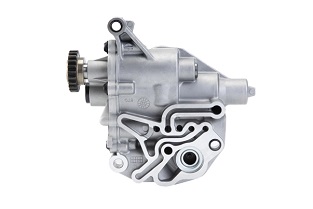
The second-generation EA888 engine uses a gear-type variable displacement oil pump, which is more advanced than traditional fixed-displacement designs.
The EA888 oil pump is an external meshing gear pump with a unique feature: one of the gears is mounted on an axially movable shaft. This movable gear allows the pump to adjust its output dynamically based on engine operating conditions.
The EA888 oil pump operates in two primary modes:
High oil pressure mode
Low oil pressure mode
By shifting the position of the passive gear, the pump changes the effective volume of oil being delivered. At higher engine loads or speeds, the pump increases oil pressure to ensure sufficient lubrication. At lower loads, such as idle or cruising, it reduces pressure to minimize parasitic losses and improve fuel efficiency.
This variable displacement design helps the EA888 engine balance performance, durability, and fuel economy—but it also adds complexity, which increases the risk of failure over time.
When the vw oil pump begins to fail or its related components malfunction, several warning signs may appear. Early detection is essential.
A noticeable ticking or tapping sound at engine idle may indicate insufficient oil pressure reaching the valvetrain components. This is often one of the earliest symptoms of oil pump inefficiency.
Modern EA888 engines are equipped with oil pressure sensors. If oil pressure drops below acceptable limits, the engine control unit (ECU) will trigger a fault code and illuminate the check engine light.
This is a critical warning. In most EA888-equipped vehicles, the red oil pressure warning light will illuminate if oil pressure at idle falls below 0.8 bar. When this happens, the engine should be shut off immediately to prevent damage.
At this stage, diagnosis should focus on the oil pressure regulating valve and the EA888 oil pump itself.
If the vehicle is equipped with an oil pressure gauge or if pressure is measured during diagnostics, readings below factory specifications strongly indicate oil pump wear or internal leakage.
Several factors can contribute to oil pump problems in the EA888 engine:
If the oil filter is not replaced regularly, it can become clogged, restricting oil flow. This forces the oil pump to operate under higher load, accelerating wear of the internal gear chamber and pressure regulation components.
When the engine operates under high load or excessive RPM, oil leakage within the engine increases. If the oil pump's pressure relief valve sticks or responds slowly, oil pressure may spike or drop suddenly. This can trigger the oil pressure warning light and lead to lubrication failure.
Over time, internal gear wear and housing degradation reduce the pump's efficiency. Once wear reaches a certain point, replacement of the EA888 oil pump becomes the only reliable solution.
If repeated low oil pressure warnings occur, or if diagnostics confirm unstable pressure caused by pump wear or valve failure, replacing the oil pump is strongly recommended. Continuing to drive with a faulty EA888 oil pump can result in:
Crankshaft bearing damage
Turbocharger failure
Camshaft and valvetrain wear
Complete engine seizure
In most cases, replacing the oil pump is significantly more cost-effective than repairing engine damage caused by oil starvation.
For those seeking a reliable and high-quality replacement, HUIZHAN offers a premium EA888 2.0T Oil Pump designed to meet or exceed OEM specifications.
Precision-manufactured gear structure for stable oil pressure
Durable materials to withstand high-temperature and high-load conditions
Fully compatible with EA888 2.0T engines used in Audi and Volkswagen models
Strict quality control to ensure long service life and performance reliability
Whether you are performing preventative maintenance or addressing an existing oil pressure issue, the EA888 2.0T Oil Pump from HUIZHAN is a dependable solution that helps restore optimal engine lubrication and long-term performance.

 English