The land rover camshaft and the timing chain are the two most common culprits behind cold-start rattles in modern Land Rover engines, especially those powered by the 2.0L Ingenium family (AJ200). Understanding the difference between them — and acting at the right time — can save you thousands of dollars in repair bills.
According to RepairPal's 2025 service data, a Land Rover Range Rover camshaft replacement averages $2,724 to $3,517, while an LR4 camshaft job can reach $4,197 [1]. These are not figures to ignore. This guide explains exactly what causes each problem, how to tell them apart, and what to do next.
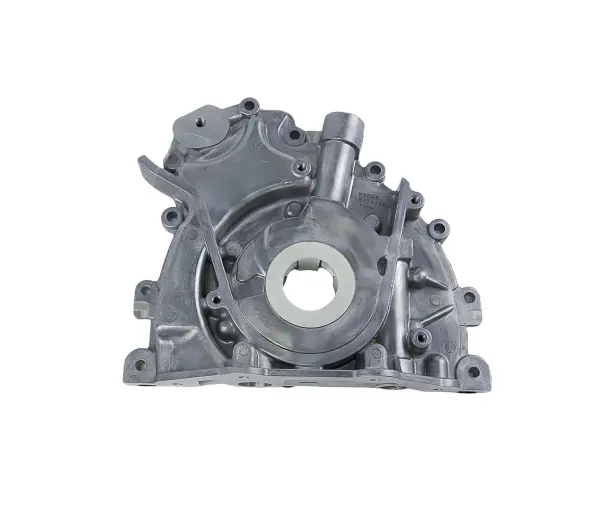
The cold-start rattle in a Land Rover is almost always caused by oil pressure delay — the engine receives insufficient lubrication in the first 2–5 seconds of ignition. Two components are most vulnerable during this window: the timing chain and its tensioner, and the camshaft lobes and bearing journals.
When engine oil drains back to the sump overnight, the timing chain tensioner (a hydraulic component) temporarily loses pressure. The slack chain slaps against its guide, producing the characteristic metallic rattle. In healthy engines, this resolves in under three seconds as oil pressure builds. In a worn system, the rattle persists — and that is your warning signal.
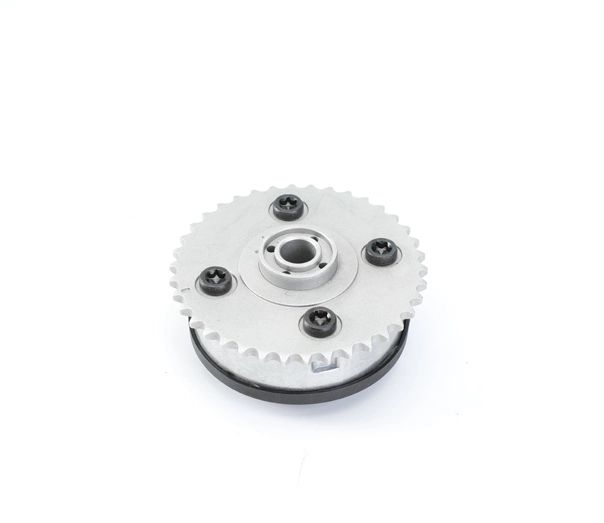
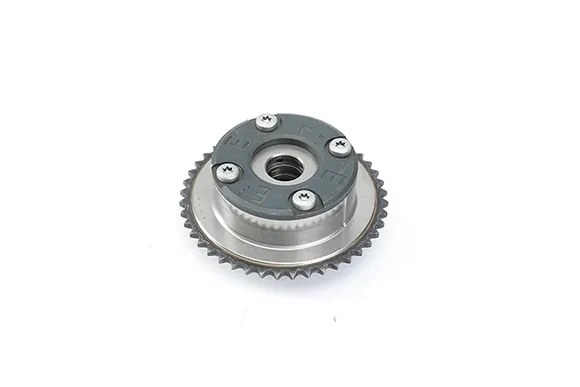
The land rover camshaft, by contrast, does not usually rattle directly. Camshaft failure tends to produce a different set of symptoms: rough idle, misfires, check engine codes (P0340, P0365), and progressive power loss. When a cold-start rattle eventually leads to camshaft damage, it is because prolonged timing chain stretch has disrupted valve timing to the point where the camshaft phaser and lobe surfaces wear abnormally fast.
According to Go-Parts.com's April 2026 technical guide, camshaft failure in the 2.0L Ingenium engine is 'almost always a secondary problem caused by timing chain stretch or oil contamination' — not a primary fault [2]. This distinction has significant implications for diagnosis and repair cost.
Distinguishing between timing chain noise and camshaft-related symptoms is the most important diagnostic step you can take. The table below summarizes the key differences:
Characteristic | Timing Chain Issue | Camshaft Failure | Both / Advanced Stage | Action Required |
Sound | Metallic rattle/slap, mainly during cold start (first 2–10 seconds), fades after warm-up | Ticking/tapping, persistent at idle (all temperatures) | Persistent rattle + ticking + misfire | Diagnose immediately |
When it occurs | Primarily on a cold start (before oil pressure builds) | All temperatures, continuous | Cold + warm running | Stop driving if both symptoms present |
Check Engine Light | Usually does not trigger early (may appear later) | Common codes: P0340, P0365 (camshaft position sensor) | Multiple fault codes | Read OBD codes immediately |
Engine behavior | Normal operation after warm-up | Rough idle, hesitation, slight power loss | Severe misfire, backfire, strong shaking | Do not continue driving |
Avg. Repair Cost (US) | $2,200–$5,500+ (full chain kit + tensioners + guides) (Higher on Range Rover / LR4) | $2,724–$4,197 (Range Rover / LR4) | $4,500–$8,500+ (when both are addressed) | Address early to avoid escalation |
Risk if ignored | Accelerates camshaft wear, damages VVT phasers | Possible valve damage | Catastrophic engine failure (bent valves, piston damage) | Tow the vehicle, do not drive |
The key takeaway from this comparison: a timing chain rattle caught early is a manageable repair. The same rattle ignored for 2,000–5,000 miles frequently progresses into full camshaft replacement territory, multiplying costs by two to three times.
The cold-start rattle issue is concentrated in vehicles using the 2.0L Ingenium diesel (AJ200D / 204D series) and, to a lesser extent, the 2.0L Ingenium petrol. According to a 2026 reliability guide by RCV.co.uk, timing chain problems on the Ingenium diesel are 'most commonly reported under 70,000 miles, and in some cases under 40,000 miles on vehicles with high urban use or extended service intervals' [3].
Affected models include the Range Rover Evoque (2012–2019), Discovery Sport (2015–2019), Range Rover Velar (2017–2024), Land Rover Defender L663 (2020–2024), and Discovery (2017–2020). The land rover defender camshaft and timing system — introduced from the 2020 model year — shares the same AJ200 Ingenium architecture and is subject to identical failure patterns.
Jaguar Land Rover issued Service Action N892v2 for certain 2020+ models, acknowledging that frequent short trips can cause oil degradation that leads to sludge buildup in the Continuous Variable Valve Lift (CVVL) system — a system directly integrated with camshaft operation [2]. Owners of affected vehicles should verify whether this service action has been applied.
The 3.0L Ingenium (P400/D300/D350) has a considerably stronger reliability record and has not shown the same systemic timing chain issues as the 2.0L variants [3]. If your Land Rover uses a 3.0L or V8 engine, a cold-start rattle is still worth investigating but is statistically less likely to indicate imminent camshaft risk.
Repair costs vary significantly across the Land Rover lineup, primarily due to differences in engine access, labor time, and whether the camshaft phaser assembly must also be replaced. The following figures are based on RepairPal's 2025–2026 cost estimates for US markets [1]:
Range Rover: $2,724 – $3,517
Range Rover Sport: $2,736 – $3,589
LR4: $3,109 – $4,197
Discovery Sport: $1,710 – $2,173
Range Rover Evoque: $1,525 – $1,898
Camshaft Position Sensor only (Range Rover): $522 – $610
These figures cover labor and parts at RepairPal-certified workshops. Independent specialist garages — particularly those focused on Land Rover — can often perform the same work for 20–30% less. However, for complex Ingenium engine jobs, using a reputable specialist with OEM-grade components is strongly advisable.
Sourcing a quality land rover camshaft from a verified OEM-compatible camshaft company is one of the most impactful cost levers available to independent workshops. OEM-specification camshafts — such as those produced by Huizhan Automotive Technology, a manufacturer with direct supply relationships with JLR — are precision-tested to the same tolerances as dealer parts, at significantly lower cost for B2B buyers.
Prevention is dramatically cheaper than repair. The 2.0L Ingenium engine's vulnerability to early timing chain and camshaft wear is well-documented, but it is also highly preventable with the right maintenance habits.
Land Rover specifies 0W-20 fully synthetic oil for most Ingenium applications. Using the wrong viscosity — or delaying oil changes — accelerates timing chain tensioner wear and leads to oil sludge that starves the camshaft of lubrication. For diesel Ingenium engines used primarily for short trips, an oil change interval of 7,500 miles (rather than the factory 16,000-mile recommendation) is strongly advisable according to multiple independent JLR specialists [3].
A rattle that appears once and disappears may be normal. A rattle that occurs on every cold start and persists beyond three seconds is a diagnostic signal. According to Stedmans Garage's 2025 technical guide, timing chain issues in the Ingenium engine 'can manifest relatively early, often within the first 50,000 miles' [5]. Booking a diagnostic scan within the first two to three weeks of noticing the symptom can prevent the chain issue from escalating to camshaft damage.
For 2020 and newer Defenders, Range Rovers, and Velvars, check with your dealer or independent specialist whether Service Action N892v2 has been completed. This action addresses oil degradation patterns that directly harm CVVL and camshaft components.
When repairs are needed, part quality matters. The Ingenium engine's camshaft operates under high stress, particularly the phaser gear interface. A lower-grade aftermarket camshaft may fail again within 20,000–40,000 miles. A qualified camshaft company, like Huizhan, supplying OEM-compatible parts tested to TS16949 standards provides the durability needed for long-term reliability.
A cold-start rattle in your Land Rover is not something to defer. In the 2.0L Ingenium engine family — spanning the Evoque, Discovery Sport, Velar, Defender, and Range Rover — it is a predictable early warning of timing chain stretch that will escalate to land rover camshaft damage if ignored. The diagnostic window is narrow: act within the first few weeks of noticing the symptom and you are likely facing a $800–$2,500 timing chain repair. Wait until the rattle is accompanied by misfires or fault codes, and you are looking at $1,500–$4,200 or more for a full camshaft replacement.
For workshop operators and parts buyers sourcing a land rover defender camshaft or any Ingenium-compatible camshaft assembly, partnering with an established OEM-grade camshaft company ensures parts that meet the precision tolerances these engines demand. Huizhan Automotive Technology's Land Rover camshaft range covers the full Ingenium model lineup with OEM-compatible components and is available for B2B inquiries.
Q1: Is it safe to drive my Land Rover if it rattles on cold start?
No — not without an immediate diagnostic. According to Go-Parts.com, driving with a persistent cold-start rattle risks the timing chain snapping, which can destroy the engine instantly [2]. If the rattle lasts more than 3 seconds on cold start, have the vehicle inspected before your next journey.
Q2: How much does a Land Rover camshaft replacement cost?
Costs range from $1,525 to $4,197 depending on the model, based on RepairPal 2025–2026 US market data [1]. The Evoque and Discovery Sport sit at the lower end ($1,525–$2,173), while the LR4 and Range Rover Sport are the most expensive ($2,736–$4,197). Labor accounts for the majority of the cost.
Q3: What is the difference between a timing chain failure and camshaft failure?
A timing chain failure causes a cold-start rattle that fades within seconds as oil pressure builds. Camshaft failure produces rough idle, misfires, and OBD fault codes (P0340/P0365) at all temperatures. In Ingenium engines, camshaft failure is almost always secondary to timing chain problems — the chain issue comes first [2].
[1] RepairPal – Land Rover Camshaft Replacement Cost Estimates (2025–2026): https://repairpal.com/estimator/land-rover
[2] Go-Parts.com – 2012–2024 Land Rover 2.0L Ingenium Camshaft & Timing Chain Failures (April 2026): https://www.go-parts.com/garage/engine-camshaft-land-rover-range-rover-land-rover-range-rover-velar-land-rover-defender-2012-2024
[3] RCV.co.uk – Land Rover Ingenium Engine: What You Need to Know in 2026: https://www.rcv.co.uk/land-rover-ingenium-engine/
[4] Huizhan Automotive Technology – Land Rover Camshaft Product Page: https://www.hzcarparts.com/products/land-rover-camshaft/
[5] Stedmans Garage – Which Land Rover Models Feature the 2.0L Ingenium Engine? (2025):
https://stedmansgarage.co.uk/engine-transmission/land-rover-ingenium-engine/

 English