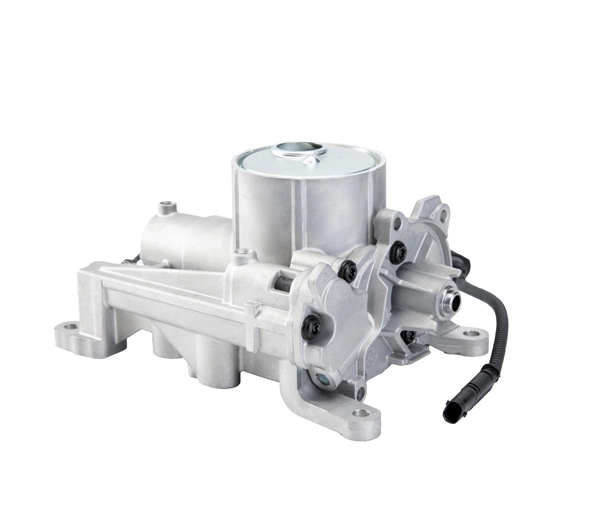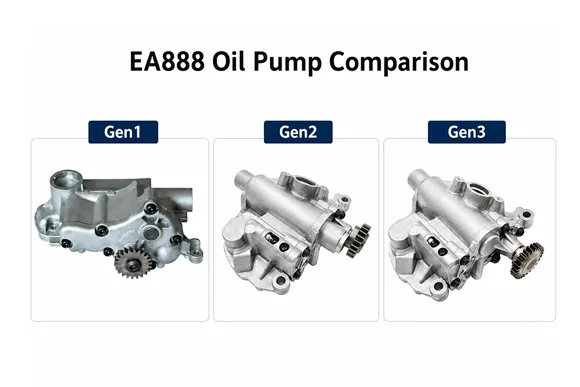
The original car oil pumps design may struggle to maintain consistent oil flow and pressure as engine components age or operate under high thermal and load conditions. Over time, this can accelerate oil consumption, reduce combustion efficiency, and negatively impact overall engine reliability.
| Common Symptoms | How the Oil Pump Upgrade Helps |
| Unstable oil pressure | Restores consistent oil pressure and reliable oil flow |
| Excessive oil consumption | Reduces oil burning by improving oil control and circulation |
| Engine vibration or rough idle | Stabilizes lubrication, resulting in smoother engine operation |
| White or blue exhaust smoke | Prevents excess oil from entering the combustion chamber |
| Sluggish acceleration | Improves engine efficiency and power response |
OEM Standard Quality – Ensures optimal engine performance and long service life.
Vehicle-Tested Reliability – Each pump undergoes rigorous in-vehicle testing.
Engineering & R&D Support – Capable of customized solutions based on real parts.
Trusted by Leading Brands – Collaborating with PSA, BENZ, BMW, FORD, and more.
Use high-quality fuel – Always refuel at trusted stations to ensure clean fuel and prevent contamination.
Keep fuel tank at proper level – Maintain at least 25% fuel to ensure correct pump temperature and reduce wear.
Check oil levels regularly – Prevent low oil, which can cause overheating and motor damage.
Install correctly – Ensure correct model, remove anti-rust oil, use proper gasket, and tighten bolts evenly.
Follow proper operation procedures – Clean vacuum oven and avoid solvent contamination during maintenance.


 English