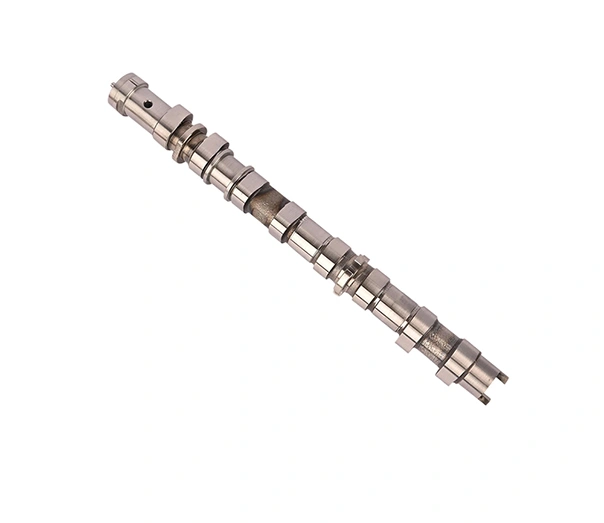
A brief metallic rattle after an overnight start, recurring camshaft timing faults or an intake camshaft that no longer correlates correctly with the crankshaft may lead a workshop to suspect M276 camshaft failure. Those symptoms still do not identify one failed part.
The Mercedes-Benz M276 uses camshafts, hydraulic camshaft adjusters, oil-control solenoids, timing chains and chain tensioners as one timing system. A fault in oil supply, a drained-down tensioner, an electrical control problem, an adjuster fault or incorrect mechanical timing can therefore create symptoms that overlap with a damaged camshaft.
This distinction also matters when sourcing 2760505801. Mercedes-Benz identifies 276-050-58-01 as a camshaft, with 2760504201 listed as the superseded number. It is not the camshaft adjuster itself.
The useful diagnostic question is therefore not simply “Does the M276 rattle?” It is: Which part of the valve-timing system is failing to hold, control or report the expected camshaft position?
The camshaft and the camshaft adjuster are connected, but they are not the same component.
The camshaft carries the lobes that operate the valves. Its position is monitored so the engine control system can compare actual camshaft timing with the crankshaft position.
The camshaft adjuster, sometimes called a phaser, changes the angular relationship between the camshaft and its drive sprocket. Engine oil pressure and electrically controlled solenoids allow the system to alter valve timing according to operating conditions.
Mercedes technical material for the M276 identifies separate Hall sensors for the left and right intake and exhaust camshafts, together with individual intake and exhaust camshaft solenoids.
A simplified control path is: ECU command → camshaft solenoid → oil flow → camshaft adjuster → camshaft angle → camshaft position feedback.
The timing-chain drive sits underneath this control system and determines the basic mechanical relationship between the crankshaft and camshafts.
Component | Main job | Typical diagnostic concern |
Camshaft | Operates intake or exhaust valves | Mechanical wear, damaged signal target, incorrect position |
Camshaft adjuster | Changes camshaft phase | Internal wear, inability to hold or reach commanded angle |
Camshaft solenoid | Controls oil flow to the adjuster | Electrical fault, sticking, restricted oil flow |
Camshaft position sensor | Reports camshaft position | Signal or circuit fault |
Timing chain | Maintains basic crank-to-cam timing | Excessive movement, incorrect timing or related drive wear |
Secondary chain tensioner | Maintains chain tension | Oil drain-back or insufficient tension during start-up |
Non-return valve | Helps retain oil supply to the tensioner | Drain-back-related start-up noise on affected engines |

Mercedes M276 Camshaft Timing System
Camshaft-related problems may produce drivability or timing symptoms, but none of these symptoms prove that the camshaft itself needs replacement.
A metallic rattle lasting several seconds after the engine starts is one of the most frequently discussed M276 complaints.
However, Mercedes issued technical information specifically addressing an M276 start-up rattle caused by the secondary timing chains before sufficient oil pressure reaches the secondary chain tensioners. The documented repair path includes non-return valves and revised secondary chain tensioners for engines within the bulletin's affected ranges.
That means: M276 cold-start rattle is not automatically camshaft adjuster failure.
The sound needs to be located and compared with the engine number, fault memory and timing behaviour before any camshaft or adjuster is ordered.
A timing fault may appear when the engine control unit sees a camshaft angle that does not agree with the expected crankshaft relationship or when camshaft adjustment does not reach its requested position.
Generic OBD correlation codes include:
· P0016
· P0017
· P0018
· P0019
These describe crankshaft-to-camshaft correlation conditions for different banks and cam positions. They identify an incorrect relationship; they do not identify which physical component caused it.
Possible areas requiring investigation include:
· mechanical timing
· camshaft position sensing
· adjuster operation
· oil-control solenoids
· oil pressure and oil supply
· timing-chain and tensioner condition
· mechanical camshaft damage
Incorrect cam timing can disturb cylinder filling and combustion stability. Before attributing a rough idle to the camshaft, also check for:
· misfire faults
· intake leaks
· ignition problems
· injector faults
· camshaft position sensor faults
· adjuster response
· mechanical timing errors
If actual camshaft angle does not track the commanded angle correctly, engine performance can be affected. This becomes more diagnostically useful when the symptom occurs together with:
· bank-specific cam timing faults
· slow or failed cam adjustment
· abnormal live-data values
· repeatable deviation under the same operating conditions
A fault that remains on the same bank after electrical and control components have been tested deserves deeper mechanical investigation. At that stage, the workshop needs to check basic timing and the physical camshaft/adjuster system rather than continue replacing easy-access electronic parts.
Sometimes it may involve the adjuster, but the sound alone cannot make that diagnosis.
This is one of the most important distinctions in an M276 timing repair.
Mercedes bulletin LI05.10-P-056435 describes engines that rattle for several seconds after start-up because the secondary timing chains remain insufficiently tensioned until engine-oil pressure builds in the tensioners. Mercedes states that correctly installed non-return valves and optimised secondary tensioners reduce oil drainage from the tensioners.
The bulletin covers specified engine-number ranges rather than every M276 ever produced.
This pattern becomes relevant when:
· the noise appears mainly after the vehicle has been parked
· it occurs immediately after start-up
· it disappears as oil pressure establishes
· the engine falls within the applicable bulletin range
· there is no separate evidence proving an adjuster or camshaft fault
An adjuster becomes more relevant when diagnosis shows that a particular camshaft:
· cannot maintain the expected phase
· responds incorrectly to actuator commands
· repeatedly fails to reach its requested angle
· shows mechanical play or internal locking problems during physical inspection
A startup sound may be part of the evidence, but it should not be the only evidence.
The physical camshaft itself moves higher on the suspect list when there is evidence of:
· damaged lobes or journals
· a damaged or displaced position-signal feature
· mechanical damage where the camshaft interfaces with related components
· persistent correlation error after basic timing and control components have been tested
· confirmed incorrect camshaft geometry or position
Finding | More relevant area | What to check next |
Rattle for several seconds immediately after start | Secondary chain/tensioner oil retention | Engine number, bulletin applicability, tensioners and check valves |
Noise continues after oil pressure should be established | Broader mechanical timing system | Chain drive, guides, adjusters and mechanical condition |
Correlation DTC without obvious noise | Timing/signal relationship | Live data, sensors, basic mechanical timing |
One cam does not follow commanded adjustment | Solenoid, oil circuit or adjuster | Commanded vs actual angle and actuator response |
Repeated fault remains after control components test correctly | Mechanical timing/camshaft | Basic position and physical inspection |
Visible camshaft journal/lobe damage | Camshaft | Lubrication cause and replacement requirements |
This table is a diagnostic direction rather than a substitute for XENTRY or the vehicle-specific Mercedes workshop procedure.

M276 Cold-Start Rattle Diagnostic Path
Fault memory should be read with Mercedes-capable diagnostic equipment before components are removed. Record the complete fault set before clearing anything.
Useful categories include:
· crankshaft/camshaft correlation
· camshaft adjustment performance
· camshaft position sensor faults
· camshaft solenoid circuit faults
· bank-specific timing deviation
· oil-pressure-related faults where present
· misfires on the affected bank
P0016, P0017, P0018 and P0019 are correlation codes. In generic OBD terminology, they refer to unacceptable relationships between crankshaft and camshaft position on the relevant bank and camshaft.
They do not mean: Replace the camshaft.
They also do not automatically mean: Replace the camshaft adjuster.
The fault indicates that the expected positional relationship is wrong. Diagnosis still needs to determine why.
Generic OBD descriptions can help identify the affected system, but XENTRY fault details, freeze-frame data and guided tests are more useful for deciding whether the problem is electrical, hydraulic or mechanical.
Do not combine internet code lists from different Mercedes engines and assume the same test path applies to every M276 variant.
Live data can make the difference between a justified repair and parts substitution.
The terminology varies by diagnostic software, but the technician is generally interested in comparing:
· specified camshaft position
· actual camshaft position
· bank-to-bank behaviour
· intake versus exhaust response
· adjustment movement when commanded
· repeatability after a cold start
· whether the value settles when oil pressure rises
If one intake cam consistently behaves differently from the corresponding cam on the opposite bank, that difference gives the technician a more focused diagnostic direction.
If all four camshafts show abnormal values, the investigation may need to move towards basic mechanical timing, shared oil-pressure conditions, chain-drive problems, or power-supply and control issues.
A single snapshot is less useful than watching how the values change during start-up, idle and commanded adjustment.
The M276 camshaft-adjustment system depends on engine oil for hydraulic operation. Before condemning the adjuster or camshaft, check:
· oil level
· correct oil specification for the vehicle
· oil condition
· evidence of sludge or contamination
· relevant oil passages
· solenoid screens or control passages where applicable
· oil-pressure behaviour where the diagnostic procedure requires it
A hydraulic timing system can respond slowly even when the mechanical parts are still serviceable if oil supply is restricted. Likewise, fitting a new adjuster does not correct an underlying oil-supply problem.
The M276 has separately controlled intake and exhaust camshaft solenoids. Mercedes technical material identifies individual solenoids for the left and right intake and exhaust camshafts.
Before a major mechanical repair, inspect the relevant solenoid and circuit for:
· connector damage
· oil or contamination where relevant
· damaged wiring
· electrical faults
· sticking operation
· restricted oil flow
Where the workshop procedure permits component comparison or controlled activation, use the result to determine whether the problem follows the control component or remains with the same camshaft position.
Do not use a component-swap test when Mercedes repair information prohibits it for that specific application.
For an early-engine cold-start complaint, this check is particularly important.
Mercedes technical bulletin LI05.10-P-056435 applies to defined M276 engine-number ranges and describes a start-up rattle caused by the secondary chains before sufficient tensioner oil pressure develops. The bulletin specifies installing non-return valves and replacing left and right secondary chain tensioners as required.
This means a workshop should confirm:
1. the exact engine number
2. whether the vehicle falls within the bulletin's applicability
3. whether updated tensioners/check valves are already installed
4. whether the noise pattern matches the documented condition
5. whether other timing faults are also present
The bulletin also notes that tensioner versions and related parts need to be selected according to the applicable engine information rather than assumed from model year alone.

M276 Timing-Chain Tensioner and Check Valve
When correlation faults remain after electrical and oil-control checks, verify the engine's mechanical timing according to Mercedes workshop information.
Mercedes repair information for the M276 includes a procedure for checking the basic position of the camshafts using the camshaft Hall-sensor openings and specified crankshaft positioning.
This is a workshop procedure, not a casual visual check.
Incorrect basic position can result from several mechanical conditions, so the finding should lead to inspection of the timing drive rather than an immediate assumption that one camshaft is defective.
Potential areas include:
· chain position
· chain tension
· guides
· adjusters
· camshaft position features
· previous incorrect assembly
For complex timing work, use the specified holding, measuring and timing procedures. Incorrectly rotating or releasing the timing system can create additional engine damage.
2760505801 is a Mercedes-Benz camshaft part number.
Item | Detail |
Part number | 276-050-58-01 |
Compact format | 2760505801 |
Description | Camshaft |
Replaces | 2760504201 |
That last point matters when an older removed camshaft, parts invoice or distributor database shows 2760504201. The numbers should not automatically be treated as two unrelated applications.
This distinction should be maintained on product pages, quotations and workshop parts requests.
The terminology is: 2760505801 = camshaft, not 2760505801 = camshaft adjuster/phaser.
An enquiry saying “M276 cam adjuster 2760505801” should therefore be clarified before the order is processed.
Independent Mercedes parts catalogues consistently identify 2760505801 as an intake camshaft, right side for listed 3.5-litre applications.
Mercedes-Benz USA's public page confirms that the number is a camshaft and that it replaces 2760504201, but its current public listing does not provide detailed vehicle fitment or side-position information.
For this reason, a parts supplier should still verify the number against:
· VIN
· engine number
· Mercedes EPC/application data
· intake/exhaust position
· left/right bank
· supersession history
Do not identify an M276 camshaft from physical appearance alone.

Mercedes M276 2760505801 Intake Camshaft
The OE-number relationship is straightforward at the supersession level:
Reference | Status |
2760504201 | Earlier reference |
2760505801 | Replacement/superseding camshaft reference |
A2760505801 | Mercedes-format reference including the A prefix |
For B2B cataloguing, retain all valid search formats:
· 2760505801
· A2760505801
· 276 050 58 01
· A 276 050 58 01
· 2760504201
· A2760504201
This improves cross-reference matching without implying that every M276 vehicle uses this camshaft.
The following table is a catalogue reference, not a substitute for VIN verification.
Mercedes application | Catalogue years commonly listed | Engine note |
C300 | 2013-2014 | 3.5L V6 applications |
C350 | 2012-2015 | 3.5L V6 |
E350 | 2012-2016 | Check exact chassis/engine |
E400 Hybrid | 2013-2015 | Listed 3.5L hybrid applications |
GLK350 | 2013-2015 | 3.5L V6 |
ML350 | 2012-2015 | Verify trim and engine |
GLE350 | 2016-2018 | 3.5L applications listed |
R350 | 2012 | Selected 3.5L applications |
SLK350 | 2012-2016 | 3.5L V6 |
Current catalogue data identifies 2760505801 as intake (right) for listed C300, C350, E350, E400, GLE350, GLK350, ML350, R350 and SLK350 applications.
A detailed parts catalogue also lists 2012-2016 SLK350 172.457 applications with this part in the intake-right position.
Model names are not precise enough for ordering. Mercedes used the M276 across multiple chassis, displacements, output versions, production periods, and naturally aspirated and turbocharged configurations.
A customer saying “E350 M276 camshaft” has not supplied enough information to select the part confidently.
The minimum useful order data is: VIN + engine variant + production date + required bank/position + OE reference.
M276 intake and exhaust camshafts should not be treated as interchangeable because the removed parts look similar. Before ordering, identify:
6. intake or exhaust
7. right or left cylinder bank
8. OE reference
9. engine variant
10. production date or VIN application
11. any valid superseding number
This is particularly important when a repair quotation describes the failure only as “camshaft timing fault”. That phrase identifies a system problem, not the required replacement part.
A correlation fault alone is not enough.
Replacement of the camshaft is more strongly supported when diagnosis identifies a problem physically associated with that camshaft rather than with the surrounding control system.
Examples include:
· visible lobe damage
· damaged journal surfaces
· abnormal wear
· damaged or displaced cam-position signal feature
· confirmed mechanical position error attributable to the camshaft
· damage at an interface that prevents correct operation
· measured condition outside the applicable workshop specification
If no camshaft damage is found, continue investigating the timing system instead of assuming a new shaft will correct the DTC.
Finding | Replace camshaft? | Further action |
Cold-start rattle only | Not yet | Check tensioner/check-valve bulletin applicability |
P0016-P0019 only | Not yet | Diagnose correlation cause |
Solenoid circuit fault | No evidence yet | Test circuit and solenoid |
Incorrect actual cam angle | Not by itself | Check oil control, adjuster and mechanical timing |
Chain timing incorrect | Not automatically | Find timing-drive cause |
Visible cam lobe/journal damage | Likely justified | Determine lubrication/root cause |
Physical cam position feature damaged or displaced | Likely justified | Verify associated timing components |
Correct diagnosis identifies right intake camshaft and OE 2760505801 | Source correct part | Verify VIN and supersession |
Replacing a mechanically damaged camshaft without checking the reason for the damage creates a repeat-failure risk. Depending on the diagnosis, inspect:
· camshaft adjuster/phaser
· camshaft position sensor
· camshaft adjustment solenoid
· timing chain
· timing-chain tensioner
· timing-chain guides
· non-return/check valve where applicable
· camshaft bearing/journal surfaces
· oil passages
· engine oil condition
· related seals and specified single-use fasteners
If wear particles or lubrication damage are present, the inspection should extend beyond the visibly damaged camshaft.
Current catalogue information identifies this number as a right intake camshaft on listed applications. Do not use it as a generic M276 intake/exhaust camshaft reference.
If the removed component or previous documentation shows 2760504201, Mercedes lists 2760505801 as its replacement.
Do not select by “M276” alone. The M276 family covers multiple engine variants, and catalogue coverage needs to match the actual vehicle.
If the camshaft was removed because of timing-system mechanical damage, inspect the adjuster interface before reusing the old phaser. A new camshaft should not be installed against a damaged mating component without determining whether the interface remains serviceable.
For replacement camshafts, inspect lobe profile, journal finish, machining damage, burrs, corrosion, impact damage from transit and surface contamination.
A camshaft can have correct dimensions and still arrive unsuitable for installation if lobes, journals or timing interfaces are allowed to strike other metal parts during transport. Individual protection and stable internal packaging matter for distributor stock and international shipping.
For importers, distributors and engine rebuilders, the useful inspection is not limited to whether the OE number is printed on the box.
Procurement check | Reason |
OE cross-reference accuracy | Reduces wrong-position orders |
Intake/exhaust identification | Prevents position mix-ups |
Left/right bank identification | Critical on V-engine applications |
Engine/application data | Avoids treating all M276 variants as identical |
Journal dimensions | Affects bearing fit and oil clearance |
Lobe geometry | Affects valve operation |
Surface finish | Relevant to wear and lubrication behaviour |
Timing/indexing features | Must correspond with the intended application |
Material/heat-treatment control | Relevant to wear resistance |
Incoming inspection records | Supports repeat-order consistency |
Batch traceability | Helps investigate field claims |
Packaging protection | Prevents damage to finished surfaces |
Label consistency | Reduces warehouse picking errors |
For repeat wholesale orders, application-data consistency is just as important as dimensional consistency. A technically correct camshaft supplied under an ambiguous left/right or intake/exhaust description will still create returns.
Step 1 - Record the complete fault memory. Do not clear timing codes before saving them.
Step 2 - Identify the exact engine number and vehicle. This is necessary for both bulletin applicability and part selection.
Step 3 - Characterise the rattle. Is it limited to the first few seconds after start-up, or does it remain after oil pressure builds?
Step 4 - Check engine oil and relevant oil-control conditions
Step 5 - Inspect camshaft solenoids, sensors and wiring
Step 6 - Compare requested and actual camshaft position. Look for one bank or one camshaft behaving differently.
Step 7 - Check LI05.10-P-056435 applicability where the complaint matches. Inspect tensioner/check-valve configuration on affected engines.
Step 8 - Verify mechanical camshaft timing. Use the applicable Mercedes workshop procedure.
Step 9 - Inspect adjusters and camshaft mechanically when the evidence points there
Step 10 - Order the part by VIN, position and OE number. If the required component is the right intake camshaft and the application confirms 2760505801, verify the supersession and fitment before release.
This diagnostic structure prevents three common ordering errors:
· rattle = adjuster
· timing code = camshaft
· M276 = same camshaft for every application
None of those assumptions is reliable.
No. Mercedes-Benz lists 2760505801, or 276-050-58-01, as a camshaft. The official parts page also states that it replaces 2760504201.
Current parts catalogues identify 2760505801 as an intake, right-side camshaft for listed applications. VIN/EPC verification is still required before ordering.
Not necessarily. Mercedes bulletin LI05.10-P-056435 documents a start-up rattle caused by secondary timing chains remaining insufficiently tensioned until oil pressure builds in the tensioners on specified engines.
Mercedes-Benz lists 2760505801 as the replacement for 2760504201. The newer reference should still be checked against the VIN and required camshaft position.
No. These are crankshaft/camshaft correlation fault categories. They indicate that the measured relationship is outside the expected range; diagnosis is still needed to distinguish sensor, oil-control, adjuster, chain-timing and camshaft causes.
Yes, when the fault pattern points towards camshaft adjustment. The M276 uses separately controlled intake and exhaust camshaft solenoids, so electrical and hydraulic control should be assessed before committing to mechanical replacement.
Provide the VIN, engine variant or engine number, production date, required intake/exhaust and left/right position, and the old OE number where available. This reduces fitment and bank-position errors.
Check OE cross-reference, left/right and intake/exhaust identification, journal dimensions and finish, lobe geometry, timing/indexing features, surface condition, traceability and packaging protection. Inspection standards should be based on the relevant drawing and application requirements rather than visual similarity alone.
Part identity: 2760505801 is a camshaft, not the camshaft adjuster.
Position: Catalogue data identifies the reference as right-side intake on listed applications.
Supersession: 2760505801 replaces 2760504201.
Fault diagnosis: A cold-start rattle or correlation code alone does not confirm physical camshaft failure.
Timing system: Check oil control, solenoid operation, secondary chain tensioning and mechanical timing before approving a major repair.
Application: Confirm the VIN and engine information rather than ordering on “M276” or vehicle model alone.
That information gives the workshop a clearer diagnosis and gives the parts supplier enough data to avoid sending the correct component for the wrong bank or application.

Global Perspectives on Jaguar Land Rover Repair Costs: Challenges and Concerns from Car Owners Worldwide
2024 Shanghai Automechanika: Ningbo Huizhan Automotive Technology Co., Ltd. Shines with New Products, Showcasing Jaguar Land Rover AJ200 Oil Pump and More
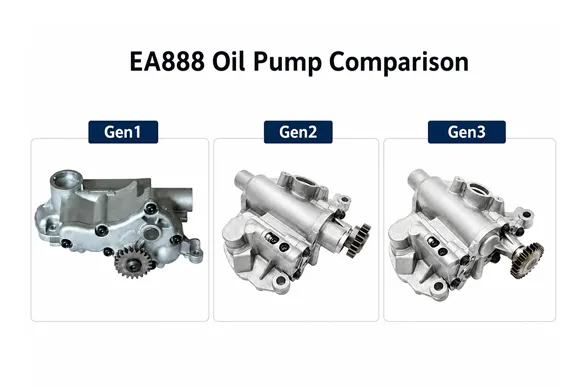
EA888 Gen 1, Gen 2 and Gen 3 Oil Pump Differences

 English